Civic Tech Field Guide
Sharing knowledge and productively growing the fieldThe Tech > Participatory democracy > Democratic Innovations > Sortition & Citizen Assemblies - (49)
Also called "citizen assemblies", "citizen juries", "mini-publics", or "allotment", this is a method of empowering a panel of citizens to make collective decisions. They're selected randomly from a larger pool, in order to promote fairness, diversity, and to reduce potential for corruption or partisan behavior.
"Developed by the Jefferson Centre in the 1970s, citizens’ juries are a type of structured deliberation with members of the public, sometimes referred to as a ‘mini public’. During facilitated workshops, participants –‘the jurors’ – are given balanced information and expert presentations about a chosen issue, before deliberating on that issue and reaching a conclusion of some kind. The issue usually addresses an area of public policy, and the conclusions generated often take the form of recommendations for policymakers." - Aidan Peppin, Ada Lovelace Institute
Showing 49 Results
Democratic Digital Commons - European Alternatives
European Union (EU)Together, we will run a series of assemblies across Europe to understand our current digital infrastructure & governance, and reimagine, showcase & demand a Democratic Digital Commons.
This paper argues that accounts of deliberative mini-publics misdiagnose the crisis by framing it primarily as a procedural deficit, neglecting a deeper dimension that populism exploits: the erosion of collective political agency.
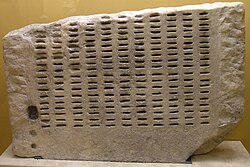
Kleroterion
AthensA kleroterion was a randomization device used by the Athenian polis during the period of democracy to select citizens to the boule, to most state offices, to the nomothetai, and to court juries.
The Global Fellows program has a single objective: to get ordinary citizens and stakeholders involved in decision-making.
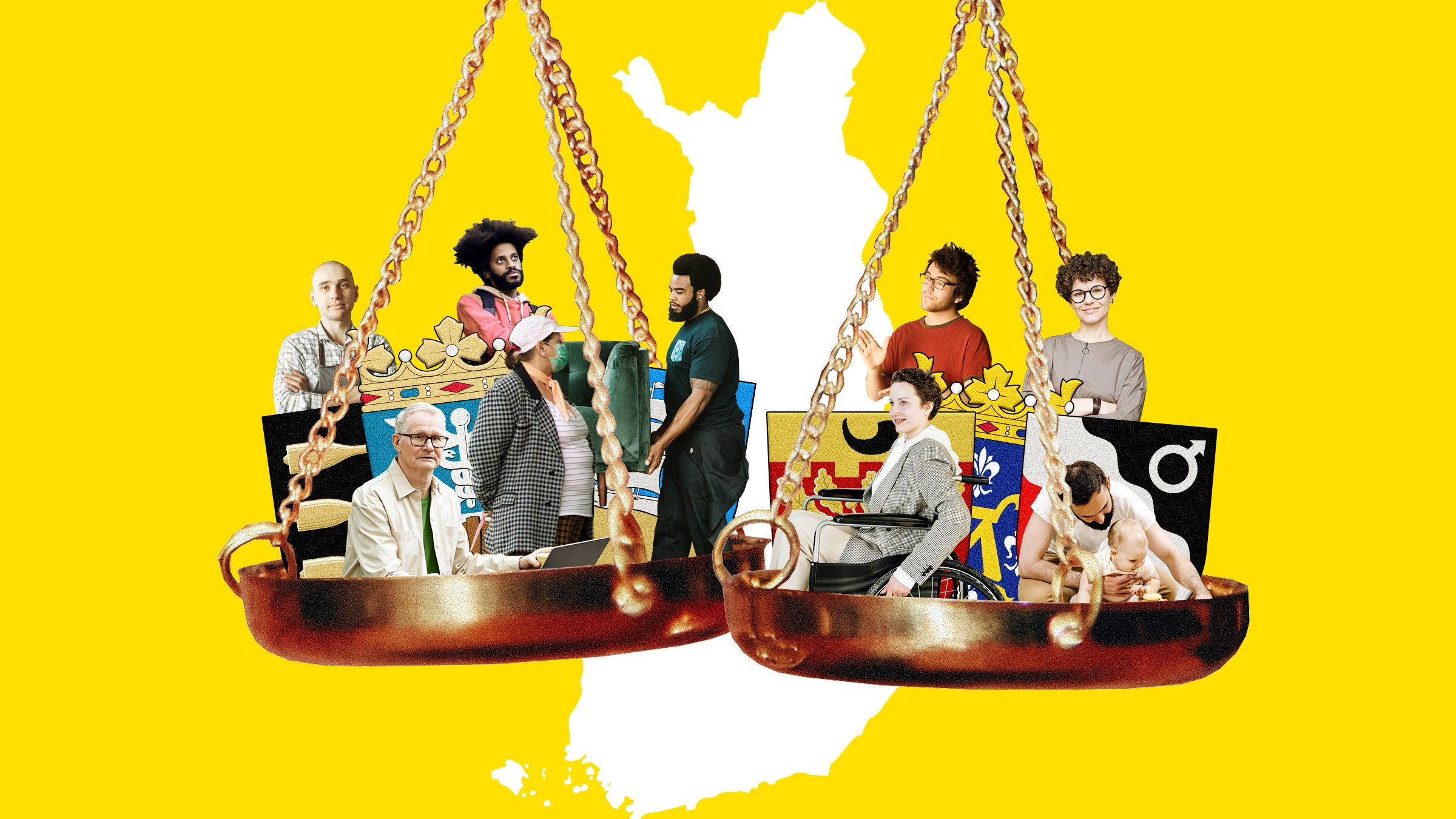
Citizens’ panel experiments at the national level in Finland
Finland (Suomi) 🇫🇮With Sitra’s funding, more citizens’ panels are now being organised in Finland than ever before.
Arantzazulab
Basque Country (Euskadi)We are committed to the innovation of democracy and the transformation of governance.

Unify America
Evanston, ILUnify America brings thousands of Americans together with interactive experiences that help them build and flex their civic muscles so we can work together to tackle our country’s biggest challenges.


Ostbelgien - Model
EupenThe permanent Citizens’ Dialogue (“Ostbelgien – Model”) is a participation project oft the Parliament of the German Speaking Community of Belgium. It counts 2 bodies: The Citizens’ Assemblies and the permanent Citizens’ Council.
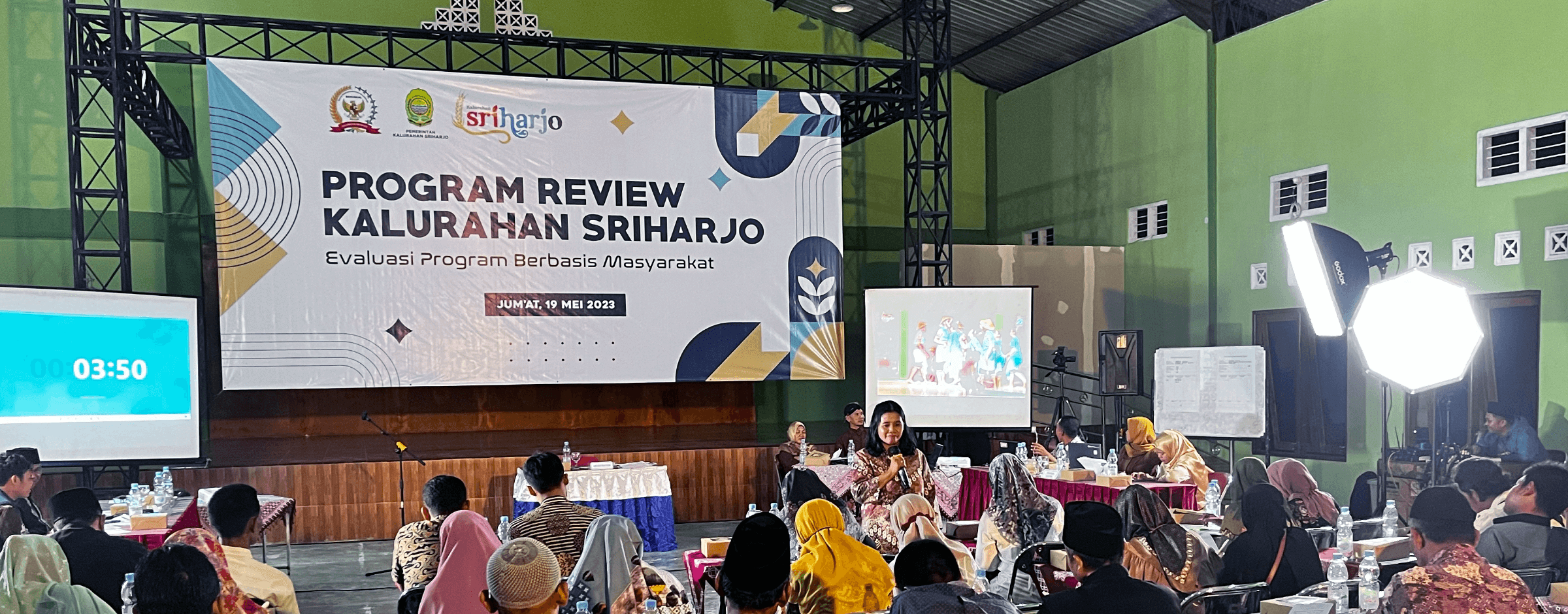
Lessons from a Climate Citizens’ Assembly Kawasaki, Japan
Japan (Nihon or Nippon) 🇯🇵The Climate Citizens’ Assembly Kawasaki (CCAK) was implemented in mid-2021 to produce recommendations for the local government to incorporate into its basic climate plan.

Tokorozawa Climate Assembly
TokorozawaTo have each participant see the global warming issue as a personal concern and engage in discussions to share awareness of the issue, and to connect the outcomes of the meetings to the revision of the city's basic environment plan (global warming countermeasures action plan) and to concrete measures
In the Fall of 2024, thirty every-day residents of Deschutes County came together to help find solutions in the region’s first-ever Civic Assembly.
House of the People
United Kingdom of Great Britain and Northern Ireland 🇬🇧A campaign to establish a parallel UK Parliament with a representative Citizen's Assembly of the public
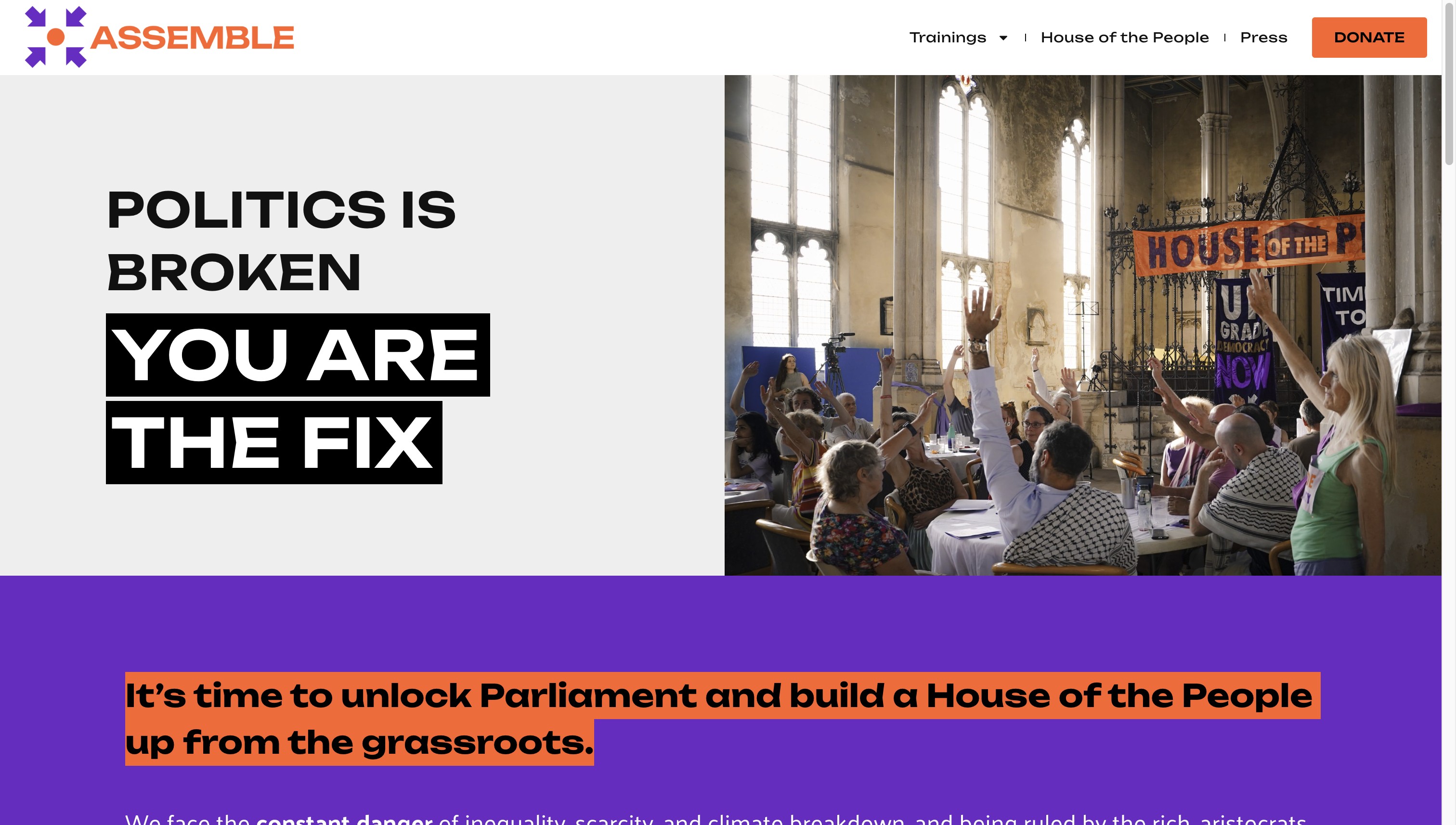
Assemble
United Kingdom of Great Britain and Northern Ireland 🇬🇧It’s time to unlock Parliament and build a House of the People up from the grassroots.

The 858 Project
United Kingdom of Great Britain and Northern Ireland 🇬🇧Let’s replace the House of Lords with a House of Citizens
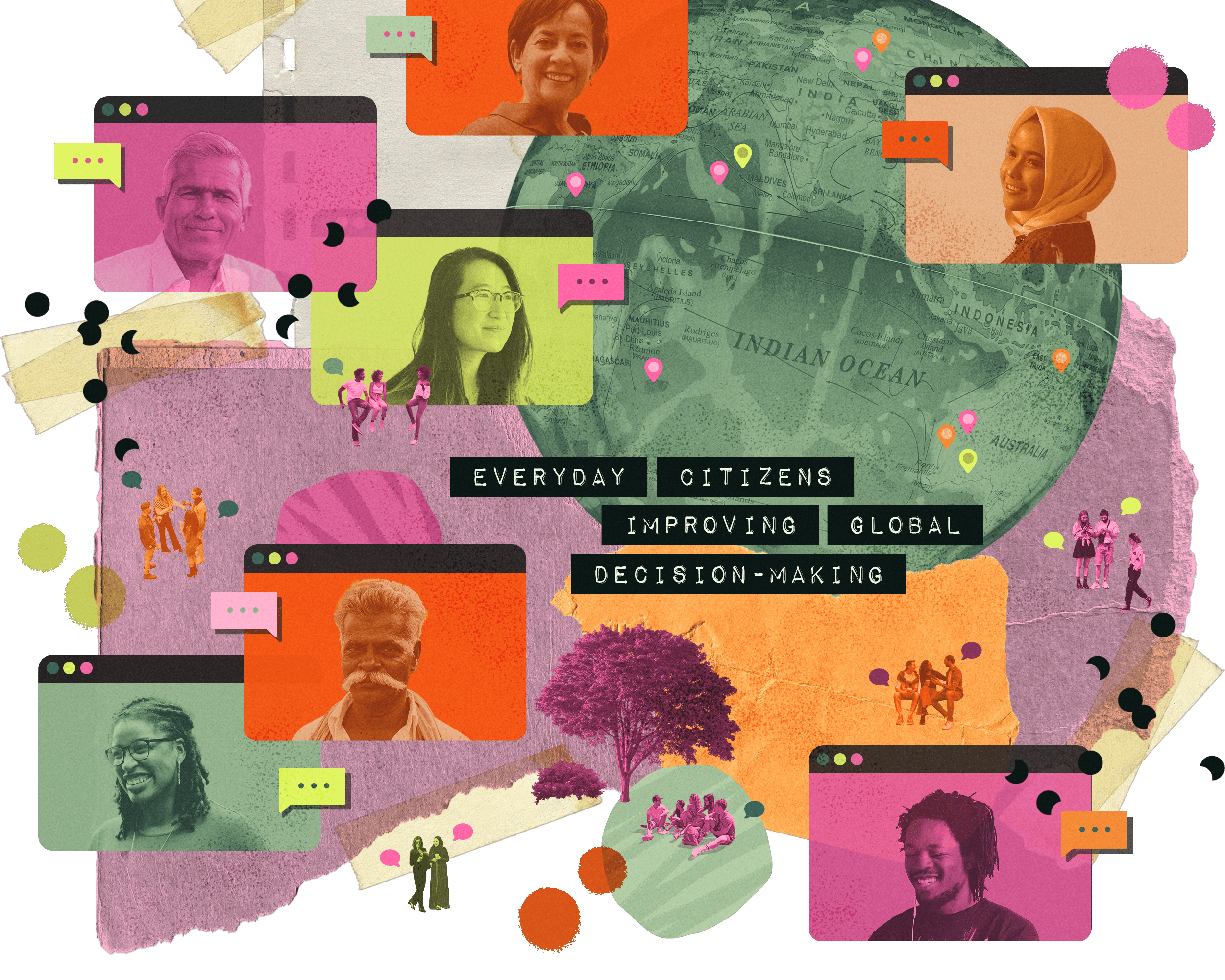
Global Citizens' Assembly Network (GloCAN)
Birmingham, UKThe Global Citizens’ Assembly Network (GloCAN) is a research collective that generates actionable insights to inform policymakers, funders, process designers, advocates and the wider community of practice designing, implementing, and evaluating global citizens’ assemblies.

Global Citizens’ Assembly
Stroud, UKThe Coalition for a Global Citizens’ Assembly brings together organisations committed to co-creating informed, collective solutions.

Lots to Gain explores how we can construct thriving democratic systems from building blocks called mini-publics, where randomly selected citizens gather, learn, connect, deliberate, seek agreement, and choose a way forward.

"In this report, we look at all multiple forms of assemblies including civic assemblies, people’s movement assemblies and governing power assemblies. We discuss the potential and limitations of each model, explore how assemblies across the board have struggled to achieve impact and durability, and discuss ways that an “equitable power-building approach” can strengthen assemblies’ impact and durability over time."
.webp)
Le Conseil économique, social et environnemental conseille le Gouvernement et le Parlement. Il représente les organisations de la société civile et associe les citoyens à la vie démocratique.

Japan Mini-Public Research Forum | 日本ミニ・パブリックス研究フォーラム
Japan (Nihon or Nippon) 🇯🇵The Japan Mini-Public Research Forum (JMPRF) is a gathering of citizens, practitioners, and scholars who implement and theoretically study mini-public citizen participation activities in Japan.

Platforma pro občanské shromáždění
Czech Republic (Ceska Republika) 🇨🇿Platform for citizen assemblies in Czechia
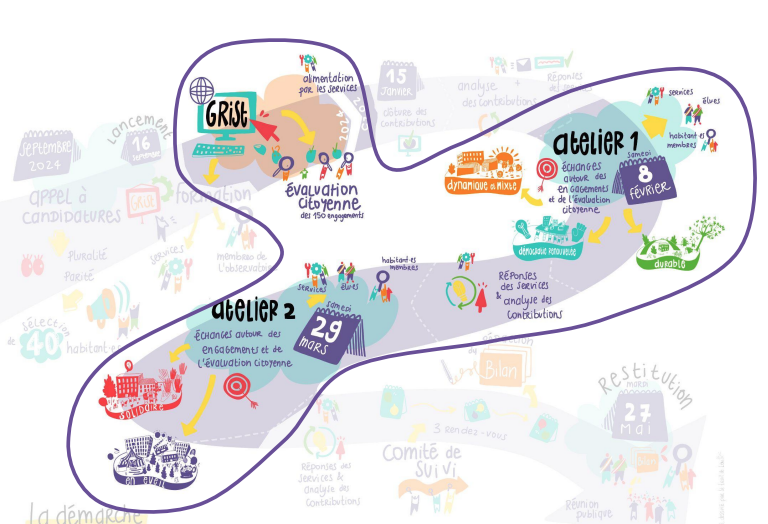
40 habitantes et habitants volontaires pour faire partie de l'Observatoire citoyen des engagements municipaux, ont évalué un par un, les 150 engagements de la mandature 2020-2026.

Democracy Innovation Hub
New York stateWe convene and train public servants, community leaders and educators to use participatory methods of engagement and tools, with a focus on citizens’ assemblies.

Democracy Without Elections (DWE)
United States of America 🇺🇸Democracy without Elections is a member-run 501c3 nonprofit that promotes the use of democratic lotteries.

Doing Democracy Differently
New York stateThis 10 Credit CTLE (Continuing Teacher and Leader Education) course presented with Democracy Without Elections introduces secondary teachers to the expanding use of lottery (sortition) to bring diverse groups of citizens together to form policy recommendations.

G1000
BrusselsG1000 is a Belgian platform for democratic innovation. We develop, support and promote new forms of deliberation that reinforce democracy from the local to the national level. We believe democracy should give more space to regular citizens.

The first sustained, detailed philosophical defense of using lotteries, rather than elections, to select political representatives

We build healthy democratic systems through innovative Civic Assemblies that elevate the voices of everyday people in public decision-making.
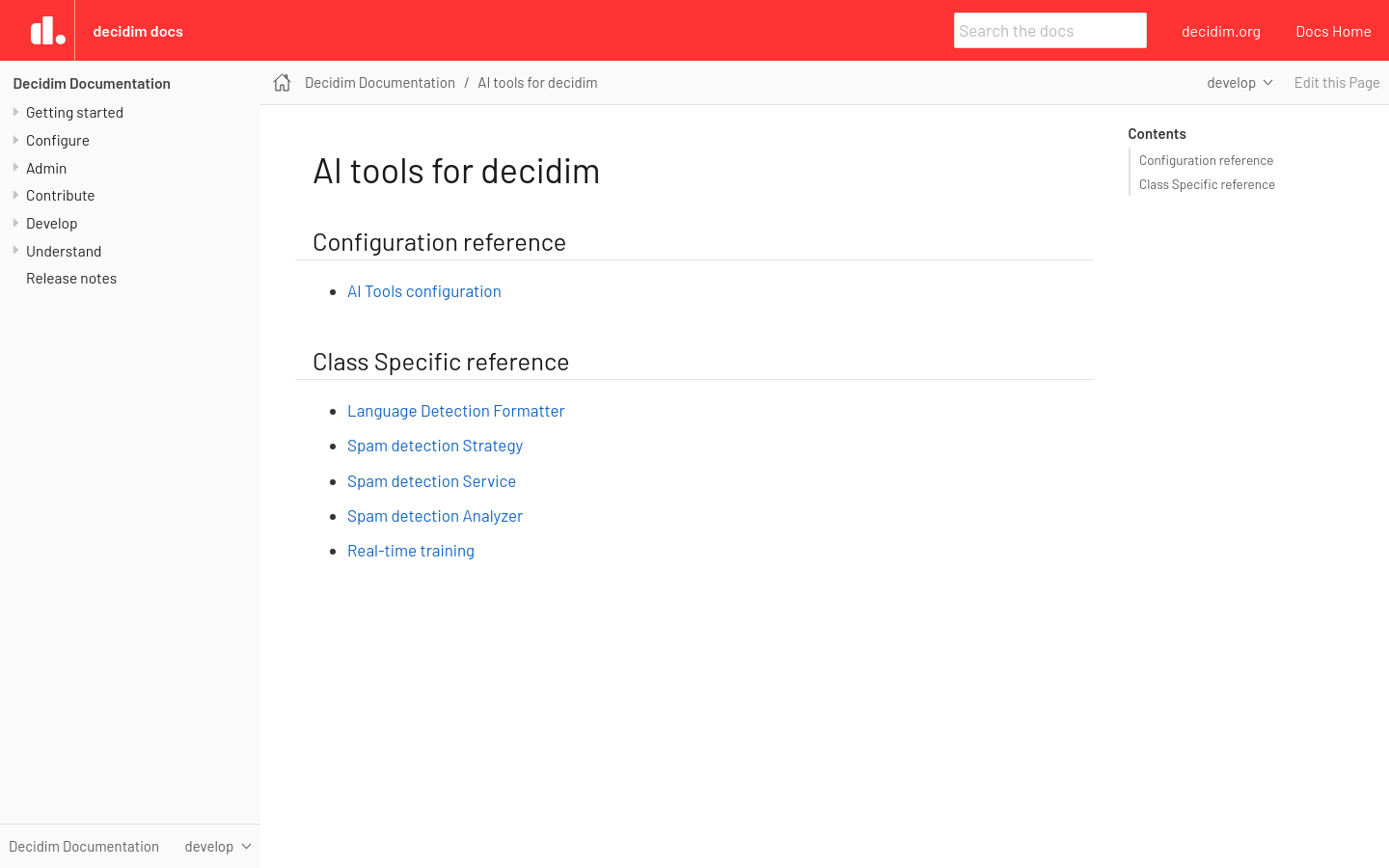
AI tools for Decidim
BarcelonaWork in progress AI integration for the participation platform that allows platform admins to install and configure a spam detection service so that any suspicious content gets reported at the earliest possible step.

MASS LBP
TorontoWe have led more than 50 Reference Panels and Citizens’ Assemblies contributing approximately 71,000 volunteer hours to policy-making in Canada — making MASS internationally recognized for its work in public deliberation.

newDemocracy Foundation
New South Wales, AustralianewDemocracy is an independent, non-partisan research and development organisation. We aim to discover, develop, demonstrate, and promote complementary alternatives which will restore trust in public decision making.

We are an international network of organizations, associations, and individuals that develop, implement, and promote ways to improve democracy, from the local to the global level.

Democracy R&D Conference
TorontoThe annual Democracy R&D conference is the leading international event for people who fund, run, commission, study and advocate for Citizens’ Assemblies.

Delibera Brasil
Brazil (Brasil) 🇧🇷Citizen assembly model

The AI Assembly is the first national deliberative event on AI in the United States and represents a significant step toward understanding public sentiment on AI-related issues and shaping the conversation around the role of AI systems in society, with a focus on transparency, accountability, and responsible use.

coletivo delibera
Brazil (Brasil) 🇧🇷O coletivo delibera trabalha com uma forma inédita e democrática de atuação da sociedade nas decisões de pautas políticas do país, de comunidades, de cidades e até mesmo de bairros.

Es geht LOS!
BerlinWir sind ein zivilgesellschaftlicher, überparteilicher Think & Do Tank für losbasierte Bürgerbeteiligung. Wir initiieren geloste Bürgerräte kommunal, im Wahlkreis, national und sogar in öffentlichen Institutionen.

Wir holen euch ab! Wie wir durch Bürgerräte und Zufallsauswahl echte Vielfalt in die Demokratie bringen
Germany (Deutschland) 🇩🇪Dabei haben sich Katharina Liesenberg und Linus Strothmann vom Team Es geht LOS einer jahrtausendealten, urdemokratischen Methode bedient: des Losens


Agora.Brussels
BrusselsCitizens' movement to practice democracy by sortition. Notable twist includes winning a seat in Brussels Parliament, where their elected representative must act on behalf of 50 residents chosen by lot.

DemocracyNext
ParisDemocracyNext is an international non-profit, non-partisan research and action institute.


Decidim
BarcelonaFree open-source participatory democracy for cities and organizations

Sortition Foundation
Cambridge, UKOrganization dedicated to promoting citizens' assemblies
Get email updates
Helpful Links
Reach Out
A project of

With support from
National Endowment for Democracy
Founding Organization
Civic Hall
Technology partner

 Civic Tech Field Guide