Civic Tech Field Guide
Sharing knowledge and productively growing the fieldThe People > Learn about civic tech > Reports - (79)
Reports about the field itself.
Showing 79 Results

In this report, we examine AI chatbots through the lens of dark patterns — deceptive or manipulative design choices that may undermine user autonomy or well-being.

Canada's cities and smaller communities are facing a looming crisis in deferred maintenance and construction of critical infrastructure, both physical and social.
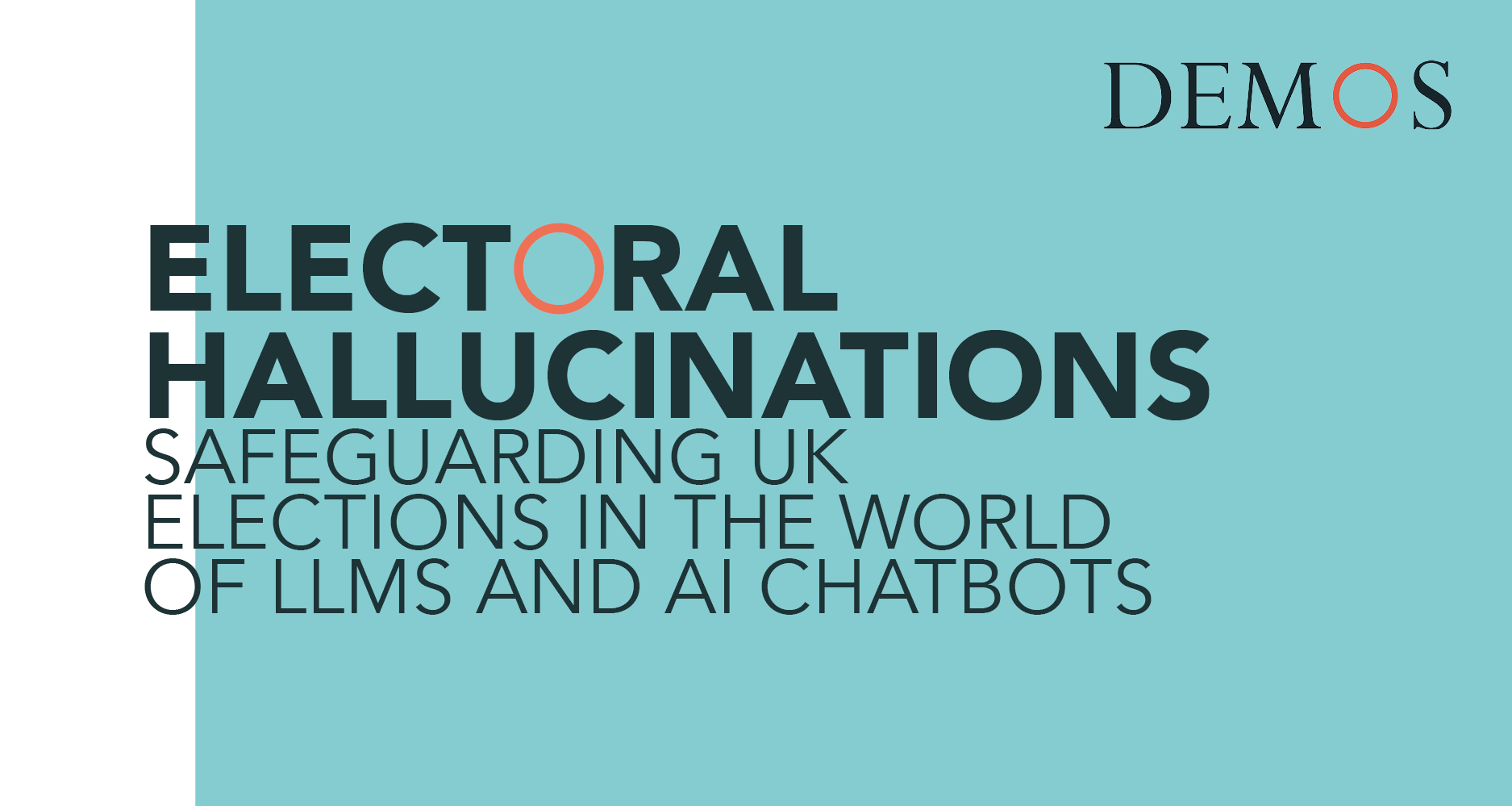
This report examines the impact of five popular chatbots and text-based AI services on the UK's information supply chain and democracy in real time.
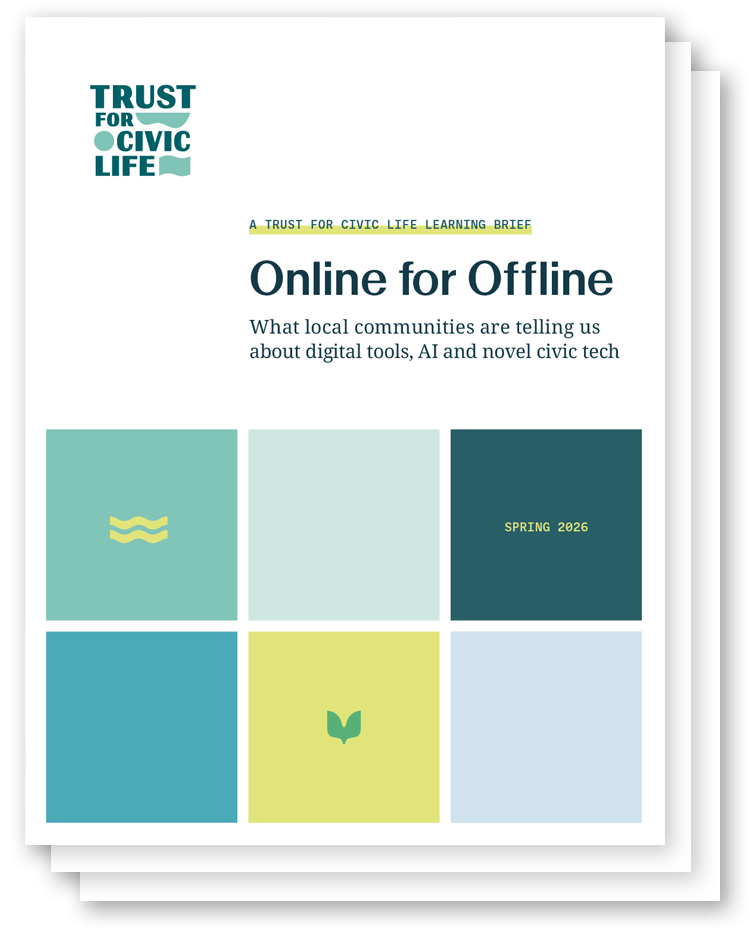
Online for Offline: What local communities are telling us about digital tools, AI, and novel civic tech
United States of America 🇺🇸Why hasn’t technology fixed our civic participation problem?
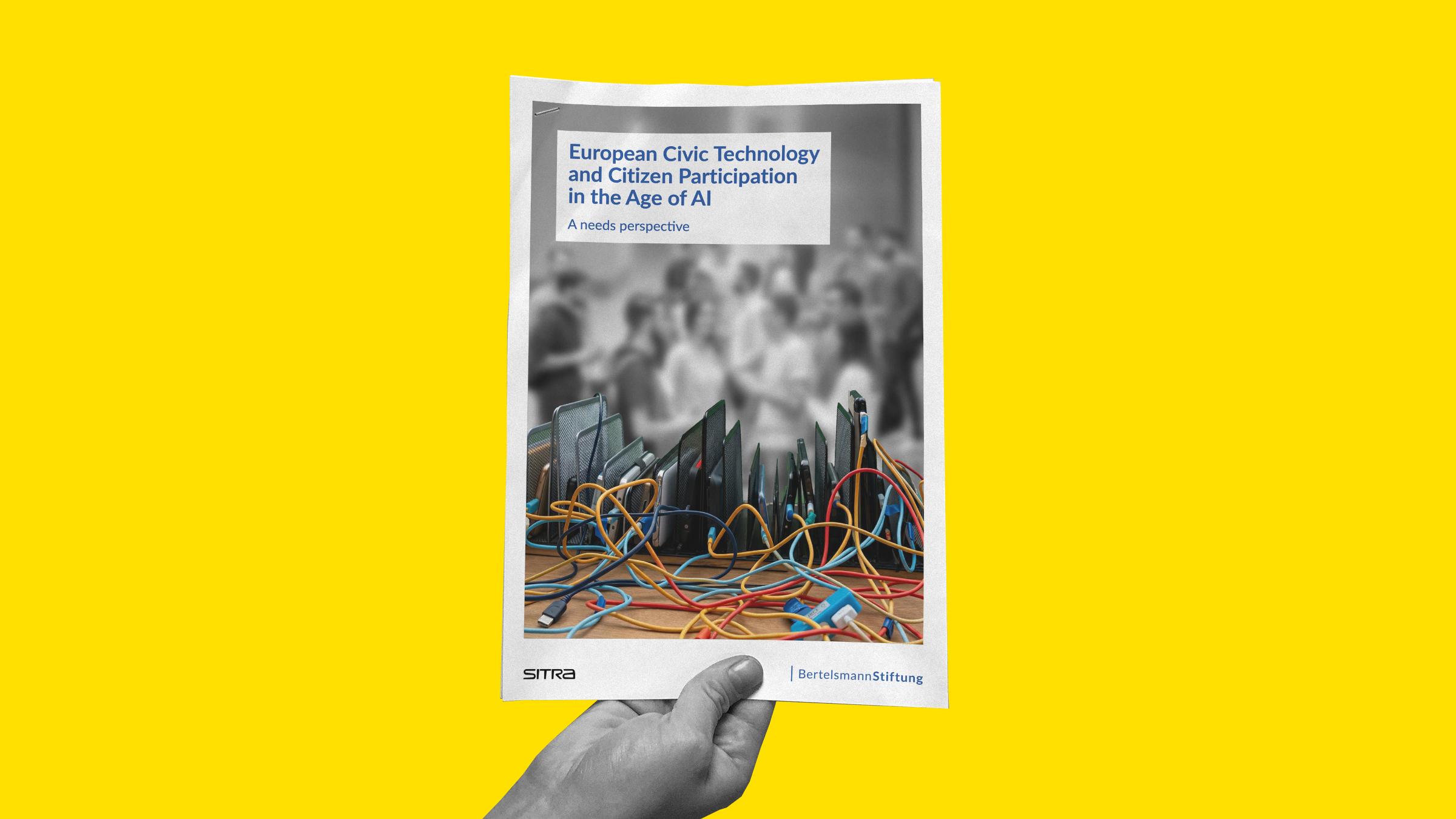
European Civic Technology and Citizen Participation in the Age of AI
Finland (Suomi) 🇫🇮This paper explores how civic technology (civic tech) – that is, the use of digital technology to strengthen democracy by informing people, enabling participation and improving government accountability – can enhance citizen participation in Europe at a time of declining trust, polarization, and increasingly AI- and platform-shaped political communication.
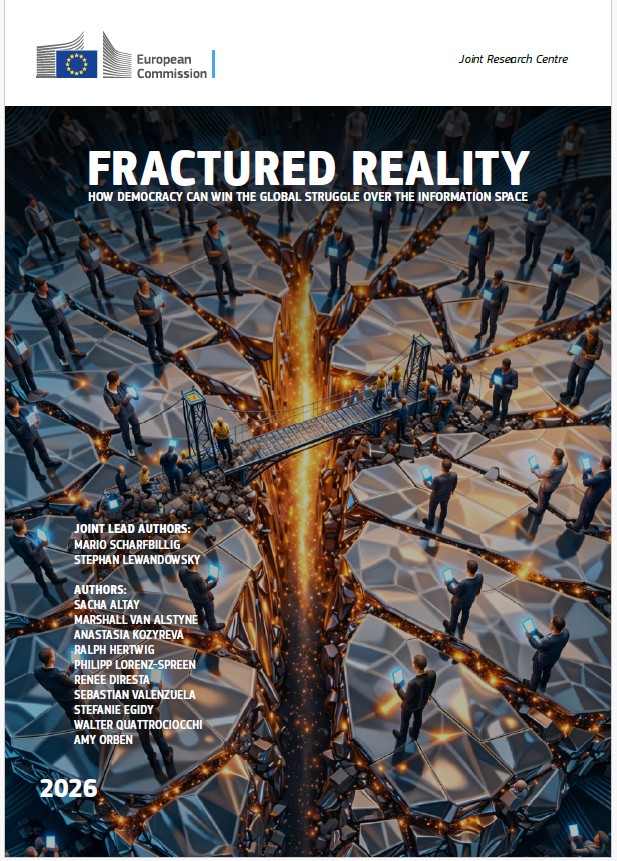
Fractured reality: How democracy can win the global struggle over the information space
Belgium (België / Belgique / Belgien) 🇧🇪The report examines the evolving impact of digital technologies on European democracy.
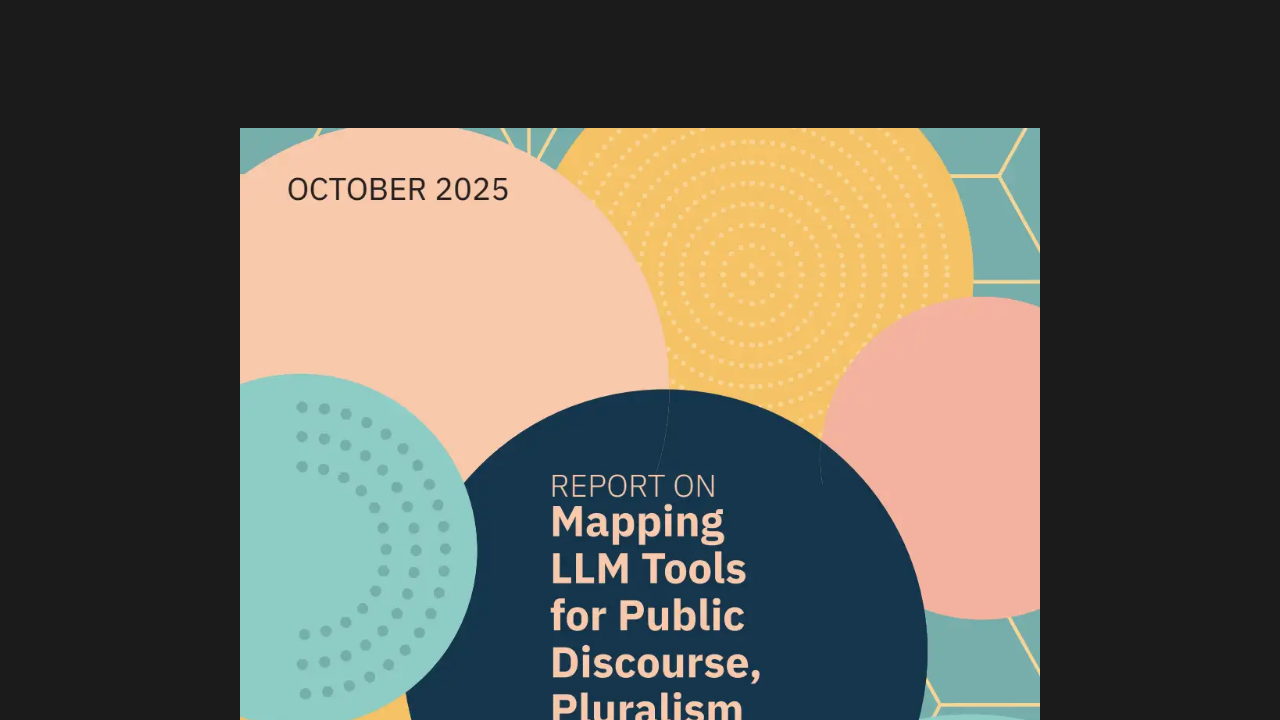
Mapping LLMs Tools for Public Discourse, Pluralism & Social Cohesion
United States of America 🇺🇸Plurality Institute and Council on Technology and Social Cohesion gathered over seventy researchers and technologists to answer the question: how can we harness that enormous power to foster public discourse, pluralism, and social cohesion in digital spaces?

The ICRC, together with The Engine Room and Block Party, produced this report on the uses of messaging apps in humanitarian situations.

It maps the dominant narratives that shape how people understand democracy, explains how messaging interacts with deeper mental models, and identifies strategies that can help rebuild support, engagement, and participation.
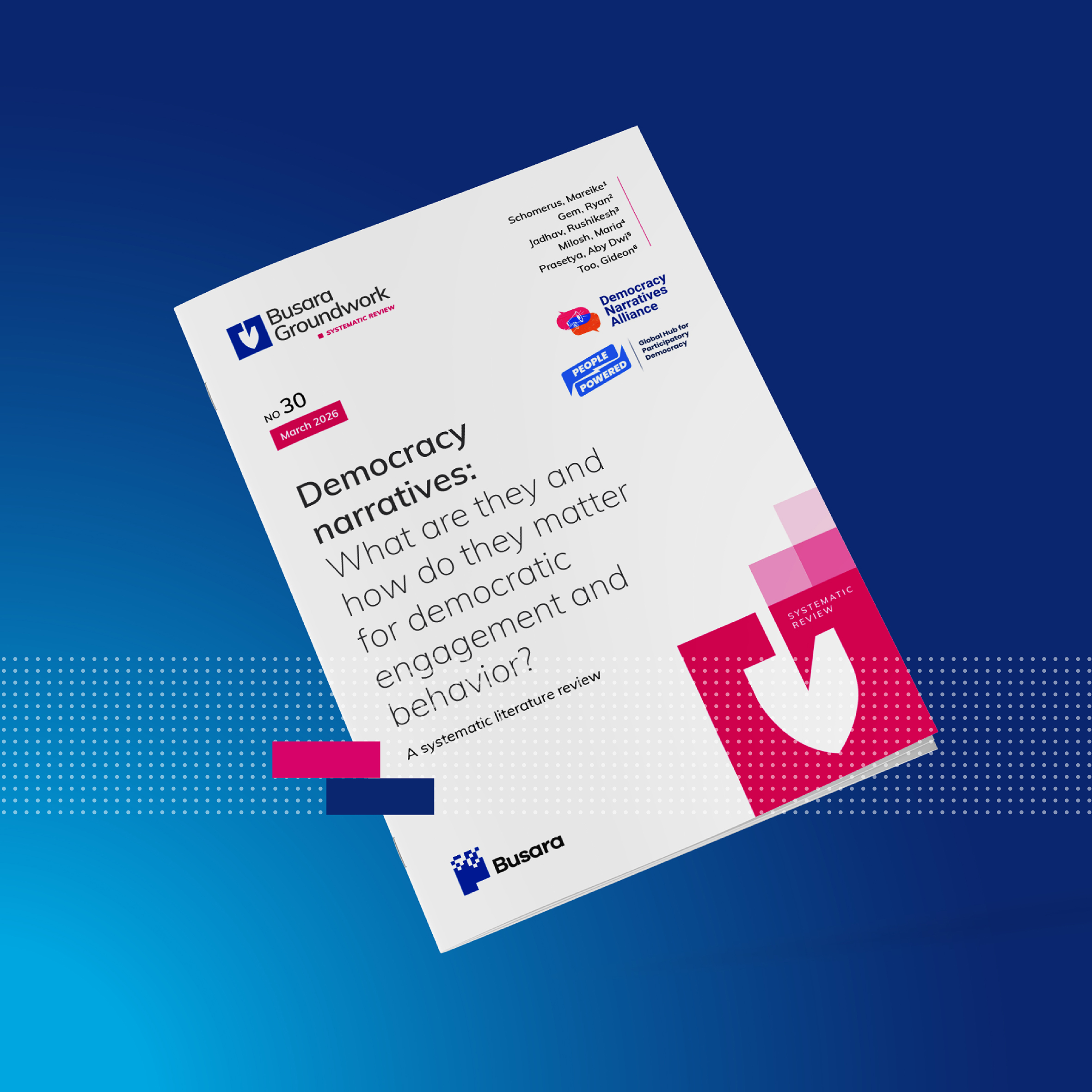
This systematic literature review examines how narratives about democracy shape democratic engagement and behavior.

The Almanack includes novel talks, vulnerability discoveries, and experiments from the most recent DEF CON summit.
How outdated systems undermine the day-to-day work of members of parliament

At a moment when diversity, equity, and inclusion initiatives face mounting political backlash and institutional retrenchment, this research asks a question that is both urgent and foundational: Who gets to shape technology policy, and what determines who stays long enough to lead?
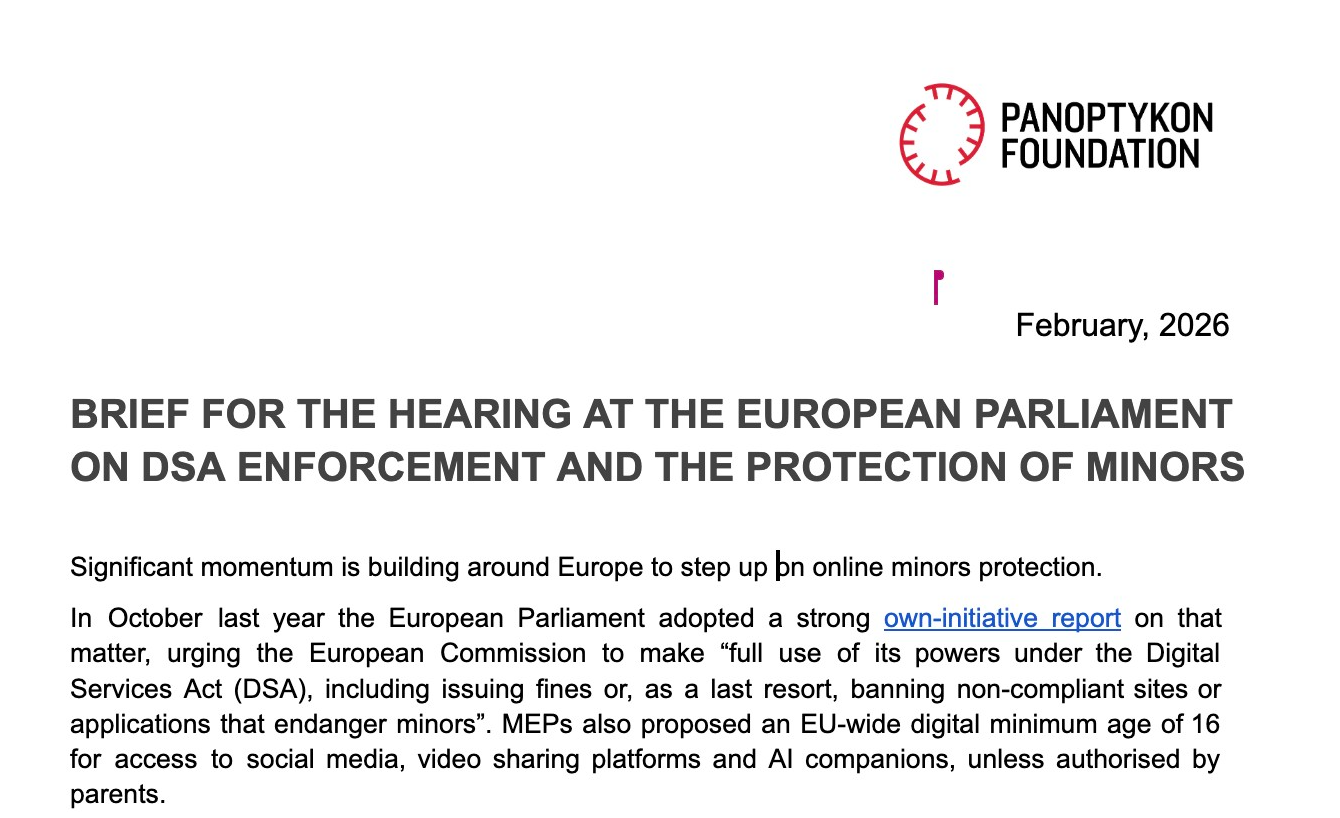
Brief For The Hearing At The European Parliament On DSA Enforcement And The Protection Of Minors
WarsawIn this brief, prepared for the purpose of the hearing organised by EPP and Renew on DSA Enforcement and the protection of minors, we tried to match the most promising claims made by VLOPs with evidence coming from independent research or civil society investigations.
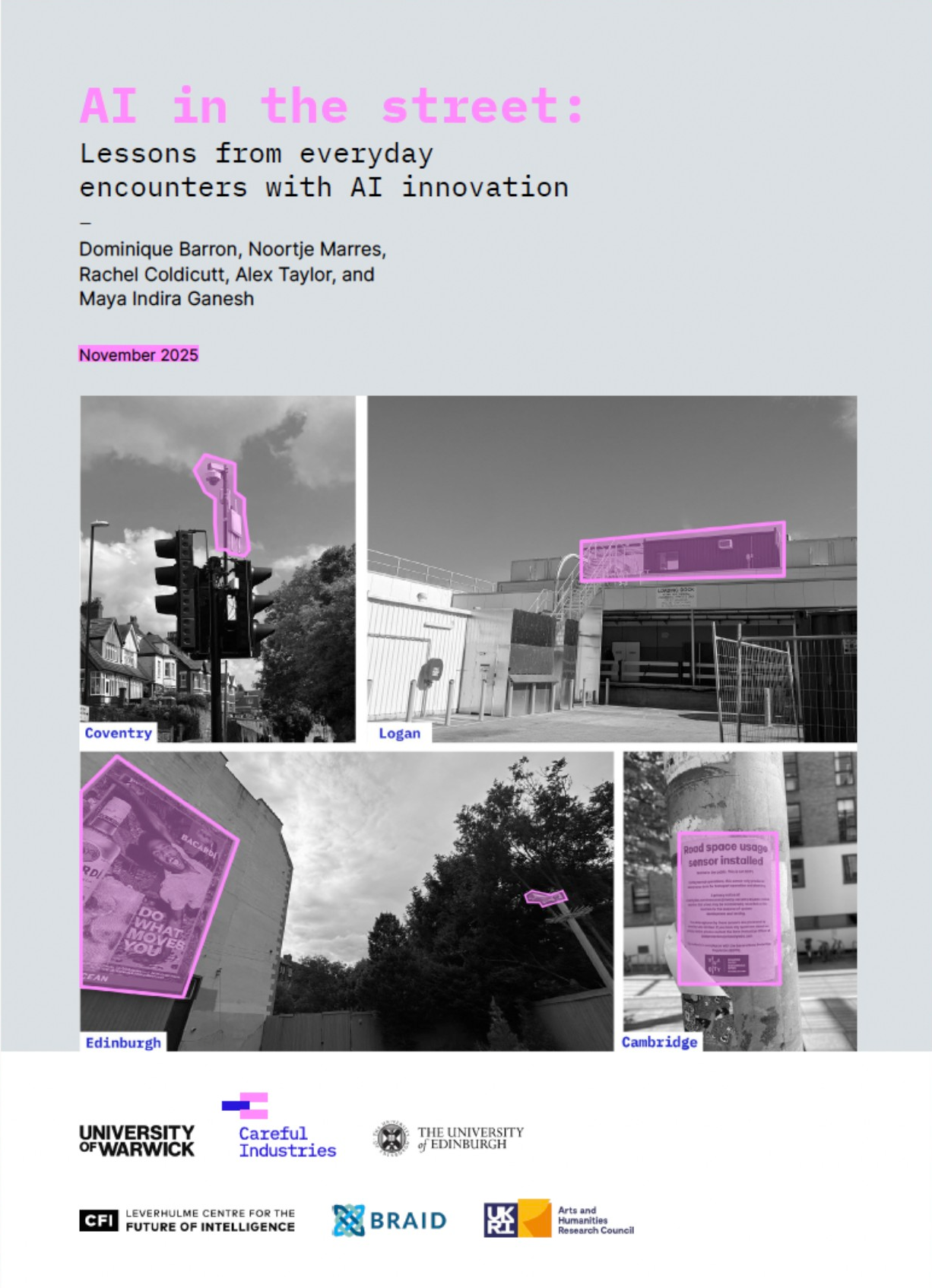
AI in the Street report
United Kingdom of Great Britain and Northern Ireland 🇬🇧One year on from AI in the Street project, this new report discusses what we learnt about how local communities and everyday publics make sense of data-intensive and AI-based technologies in their everyday environments.
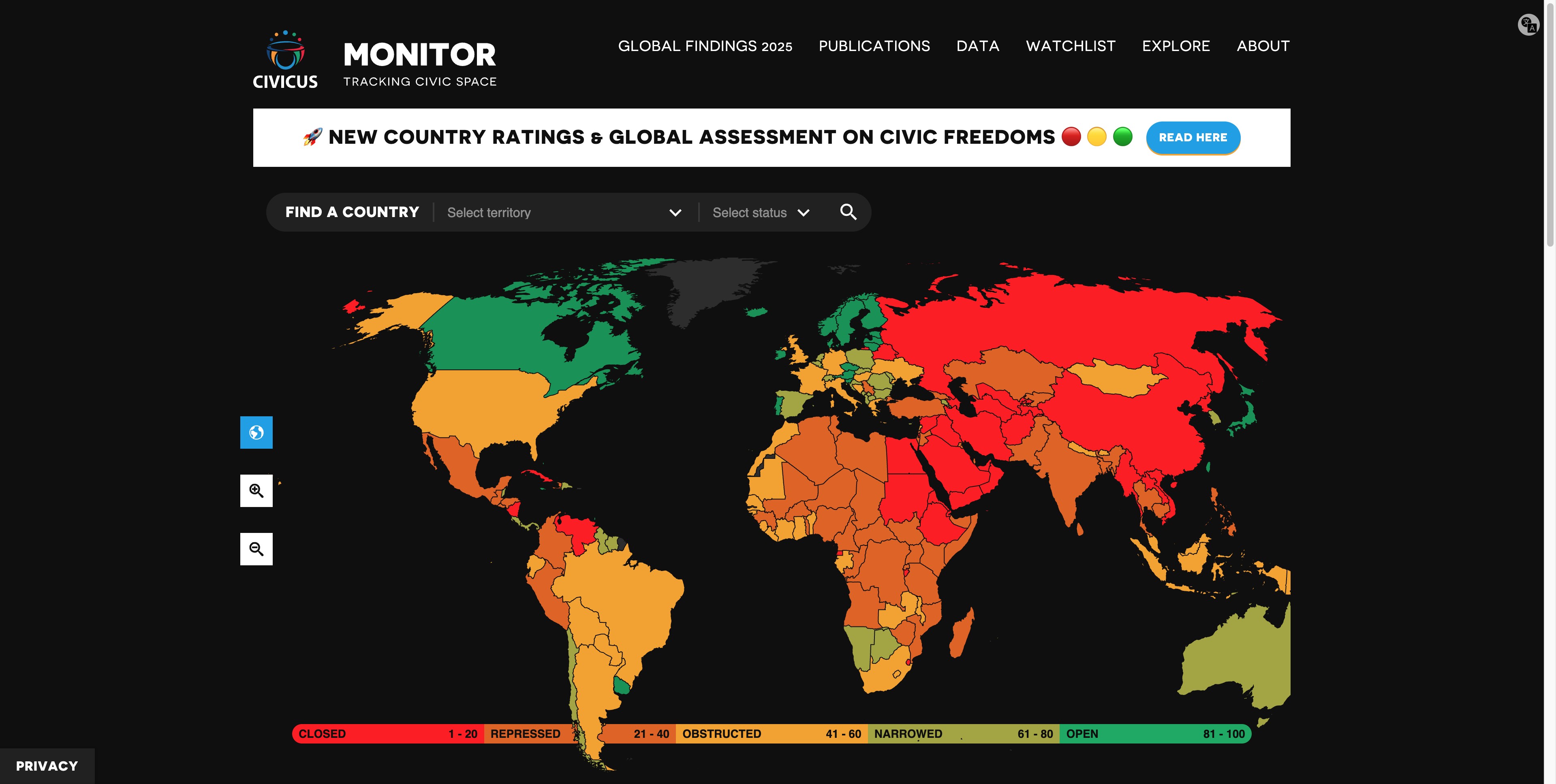
CIVICUS Monitor
JohannesburgOur interactive world map allows you to access live updates from civil society around the world, track threats to civil society and learn about the ways in which our right to participate is being realised or challenged.

This report assesses the impact of the foreign aid cuts on the global democracy ecosystem.
Facilitation in the AI Era
New York City (NYC / New York, NY)A Community Roadmap for Technologies to Support Practitioners


The Agentic State
TallinnLaunched at the Tallinn Digital Summit 2025, the Vision Paper maps how agentic AI systems will rewire the core functions of government — spanning public services, crisis management, governance, and procurement — and what technological, organisation, and leadership changes are needed to enable this shift.

Governing with Artificial Intelligence report
OECD, Rue André Pascal, Paris, FranceThe State of Play and Way Forward in Core Government Functions
Since 2001, the United Nations E-Government Survey has provided a comprehensive assessment of the digital government landscape across all 193 Member States.
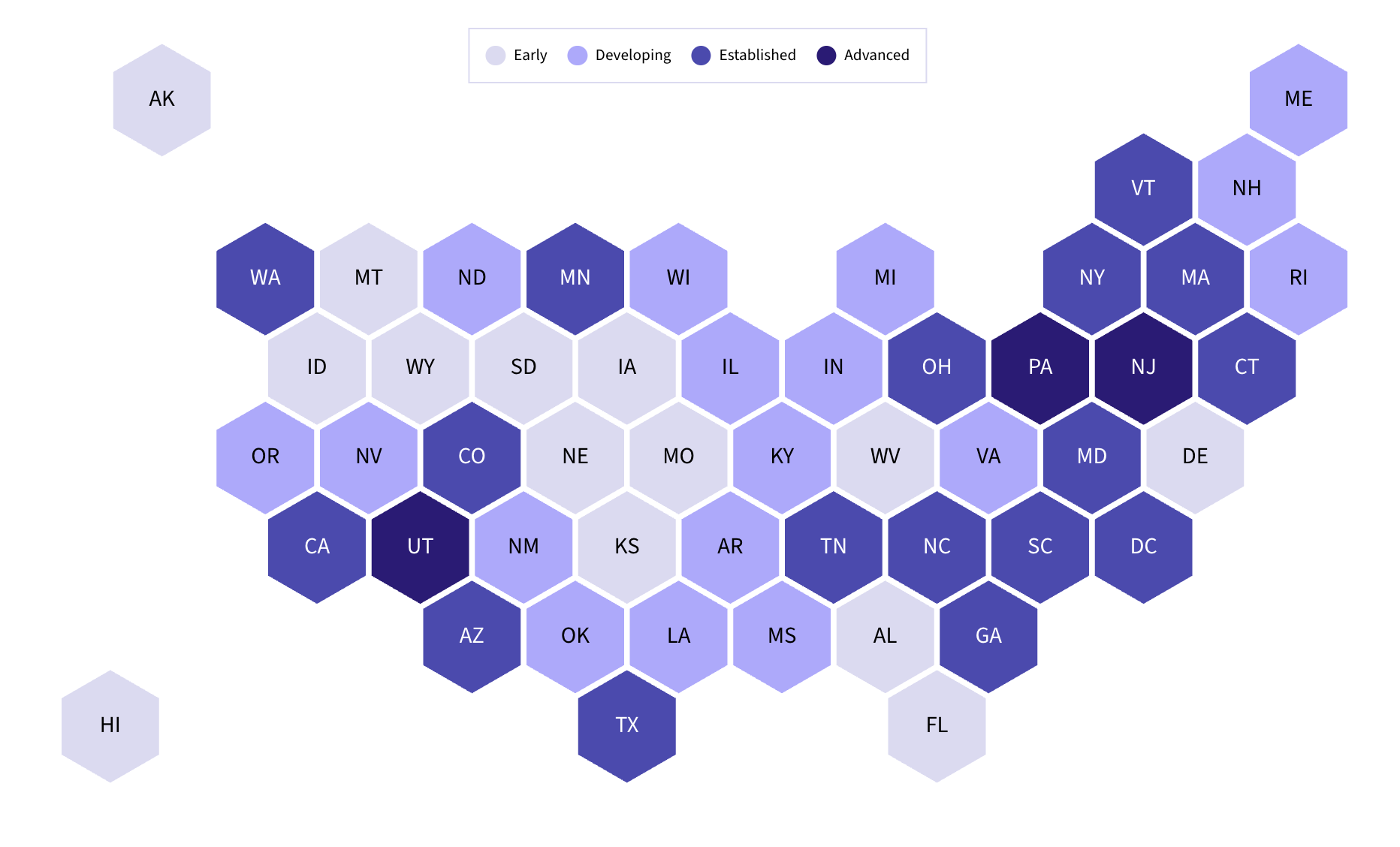
Government AI Landscape Assessment
San FranciscoMost states are navigating early or developing phases in these categories, building foundational capabilities while defining governance structures and strategic direction. But a few have emerged as national leaders—setting up dedicated AI offices, launching sophisticated pilot programs, training their staff, and building out infrastructure.
Meaningful Stakeholder Engagement in Public Procurement for Artificial Intelligence
Spain (España) 🇪🇸A playbook commissioned by Participation AI

Software Reuse through Open Source Software in the Public Sector
Denmark (Danmark) 🇩🇰A qualitative survey on Policy and Practice, by Johan Linåker, Sachiko Muto

This report examines the implications of this new phase of activism for democracy and democracy-support strategies.

2022 Compilation report by European Democracy Hub and European Partnership for Democracy, funded by Carnegie Europe

Youth Political Participation – Literature and Policy Review 1980–2023
United Kingdom of Great Britain and Northern Ireland 🇬🇧This scoping study presents an in-depth exploration of youth political participation, focusing on the design and implementation of youth-related policies.

In this paper, we examine how AI could help reimagine local government.
Deliberative Approaches to Inclusive Governance
Montreal, QC, CanadaFrom world-leading experts in deliberative democracy, civic technology, and AI governance we introduce a seven-part essay series exploring how deliberative democratic processes like citizen’s assemblies and civic tech can strengthen AI governance.

Tackling civic participation challenges with emerging technologies
OECD, Rue André Pascal, Paris, FranceThis paper offers a comprehensive examination of the role emerging digital technologies can play in improving citizen participation.

Civic Tech Project & Community Handbook
Taiwan (T'ai-wan) 🇹🇼From Taiwan’s g0v Community to the World: The Collaborative Wisdom of Digital Citizens

A $9.8 Trillion Opportunity. World Economic Forum report (2025)

Scanning the Horizon
GlobalThe report serves as an entry point to this ‘forecasting’ stream of work that organizations working in the digital rights ecosystem often overlook, especially when resources are scarce, and they are focused on current challenges and ongoing projects.
How AI Can Support Democracy Movements: Summary Report of a Research and Practice Workshop
Harvard University, Cambridge, MAThis report summarizes a December 2024 workshop on the specific issue of AI adoption within democracy movements and offers some key recommendations.

Ever wonder, “How can civic tech help improve government service delivery?” If so, check out this new research from the Canadian Digital Service! It includes 5 case studies of partnerships between the Canadian government and civic tech groups, plus tools to assess if civic tech might be a good partner for a government initiative. Find it here: https://digital.canada.ca/2025/01/23/how-can-civic-tech-help-improve-government-service-delivery/
State of Digital Government Review (UK)
United Kingdom of Great Britain and Northern Ireland 🇬🇧This review examines the state of digital government in the UK, highlighting successes, challenges, and root causes

Global Trends in Government Innovation 2024
OECD, Rue André Pascal, Paris, FranceThis report analyses nearly 800 case studies from 83 countries and identifies five critical trends in government innovation that are reshaping public services.

The How We Need Now: A Capacity Agenda For 2025 And Beyond
United States of America 🇺🇸By Jennifer Pahlka and Andrew Greenway for the Niskanen Center

Centro de Pensamiento y Acción
Asunción, ParaguayLos centros de pensamiento son «asociaciones de investigadores, de áreas diversas del saber, que, mediante la investigación, el debate académico, la producción de documentos y la relación con sectores y problemas estratégicos de la realidad nacional, definen e inciden, a partir de su trabajo en red, en la evaluación y formulación de políticas públicas».

Landscape Scan of Digital Public Goods Use in Government
The George Washington University, I Street Northwest, Washington, DCLandscape Scan of Digital Public Goods Use in Government
Africa Open Parliament Index (OPI)
GE185-7537 BOHYE ROAD (ECOWAS HIGHWAY), NEW ASHONGMAN ESTATE, ACCRA GHANAThe Index will enable civil society to work together with national and regional parliaments to identify systemic challenges to achieving parliamentary openness and to co-create reforms that will strengthen the capacity of parliaments to enhance their openness.

Paper by Joy Aceron, 2019. This paper explains why and how a reform program that opened up spaces for participatory budgeting was ultimately unable to result in pro-citizen power shifts that transformed governance.

Leveraging AI for Democracy: Civic Innovation on the New Digital Playing Field
1025 F Street NW, Suite 800, Washington, DC 200043 essays by Beth Kerley, Carl Miller, and Fernanda Campagnucci outline possible paths toward a prodemocratic vision for AI

Future-Proofing Congress
United States of America 🇺🇸How Member-Led Upgrades Are Optimizing Legislative Branch Capacity and Resilience
Civic Tech Report 2025
PragueHardcover book and online platform providing an overview of over 80 solutions from the European civic tech ecosystem

Hashtag Generation
Colombo, Sri LankaHashtag Generation is a non profit organization and movement led and run by a group of young tech-savvy, socially conscious Sri Lankans advocating for the meaningful civic and political participation of youth, especially young women and young people from minority groups

A special report by Micah Sifry

Research by Rebecca Rumbul of mySociety - As part of the joint mySociety and Democratic Society project Public Square - this literature review provides an overview of current academic research into the themes relevant to the goal of developing a meaningful, participative and collaborative digital environment, and draws out salient points to inform the development of tools and approaches to be created as part of the project.

Get email updates
Helpful Links
Reach Out
A project of

With support from
National Endowment for Democracy
Founding Organization
Civic Hall
Technology partner

 Civic Tech Field Guide