Civic Tech Field Guide
Sharing knowledge and productively growing the fieldThe Tech > Govtech > Policy > Civic tech legislation and policy - (39)
Information on bills, legislative processes, regulatory requirements, acts, and reports related to civic tech's goals of driving meaningful participation, civic engagement, and oversight.
Showing 39 Results

European Civic Technology and Citizen Participation in the Age of AI
Finland (Suomi) 🇫🇮This paper explores how civic technology (civic tech) – that is, the use of digital technology to strengthen democracy by informing people, enabling participation and improving government accountability – can enhance citizen participation in Europe at a time of declining trust, polarization, and increasingly AI- and platform-shaped political communication.
Strategic Framework and Implementation Roadmap
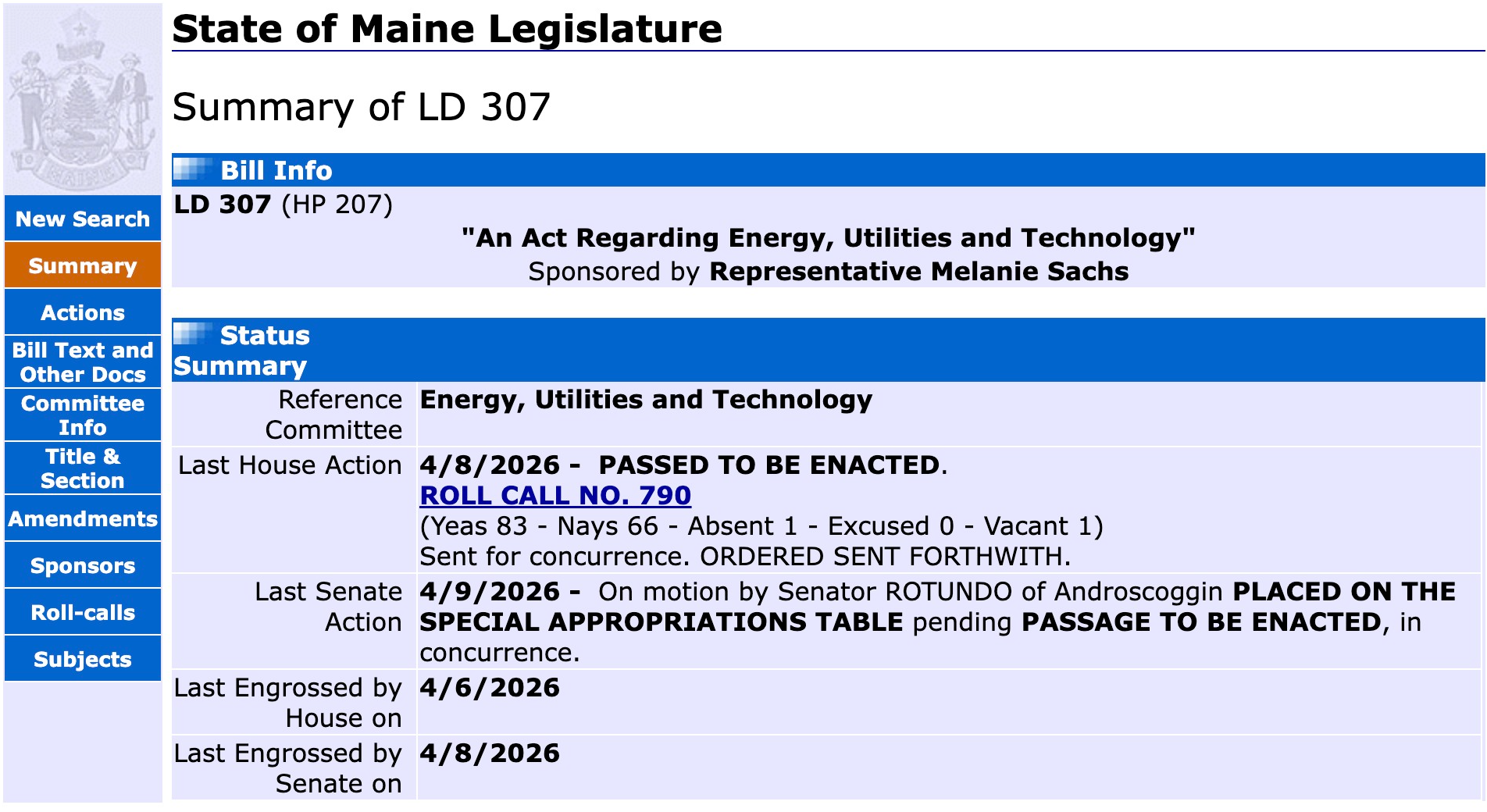
Maine bill establishing moratorium on new data centers
Modular Legislative Components to Help Spur Algorithmic Feeds that Put People First – Knight-Georgetown Institute
Washington, DCA new legislative toolkit from the Knight-Georgetown Institute equips lawmakers with modular components to support the development of legislation that encourages algorithmic feeds that put people first.
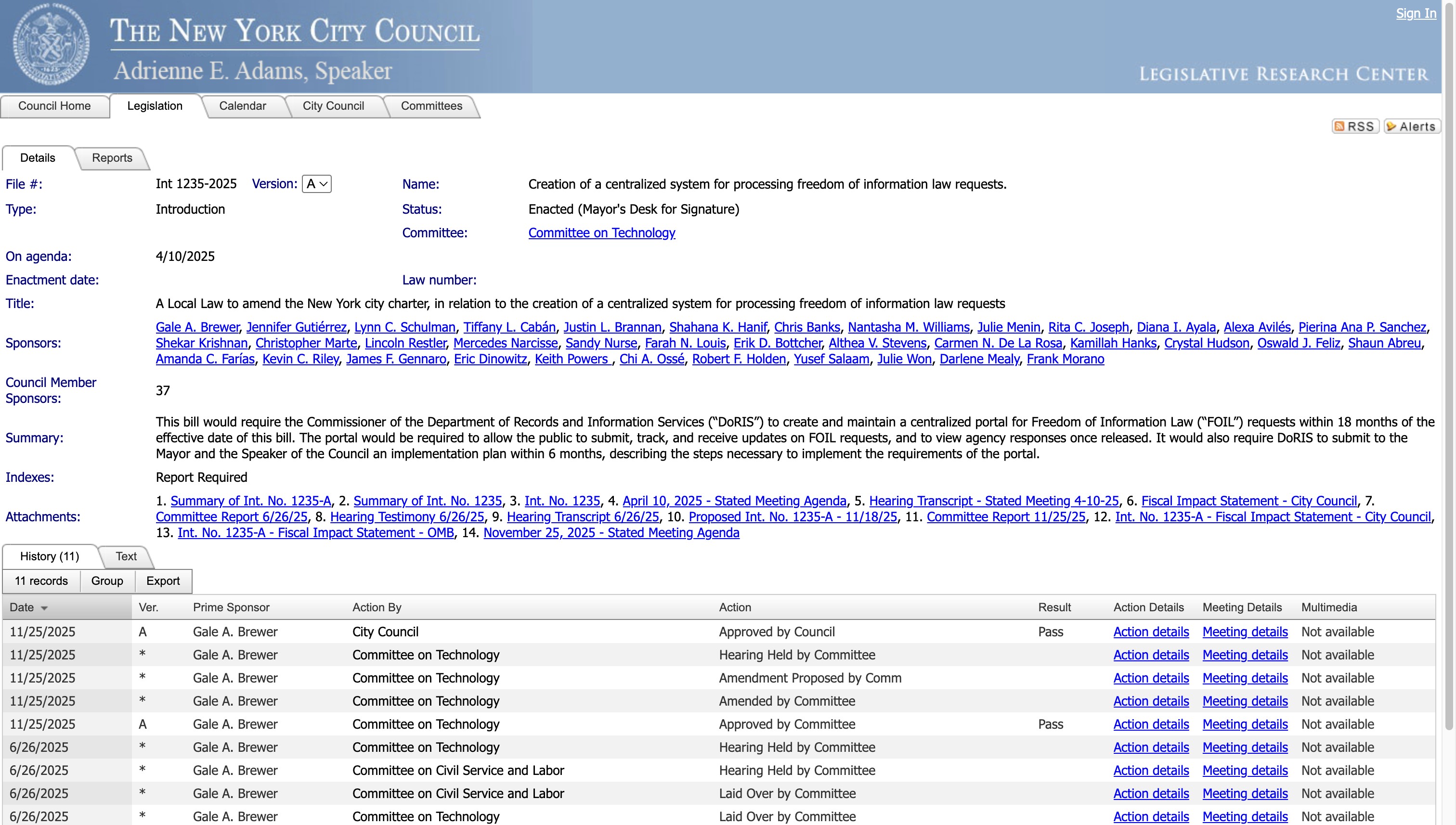
NYC Intro 1235-A of 2025 (Updating FOIL)
New York City Council, Broadway, New York, NYCreation of a centralized system for processing freedom of information law requests.
The Digital Services Act
BrusselsThe Digital Services Act and Digital Markets Act aim to create a safer digital space where the fundamental rights of users are protected and to establish a level playing field for businesses.
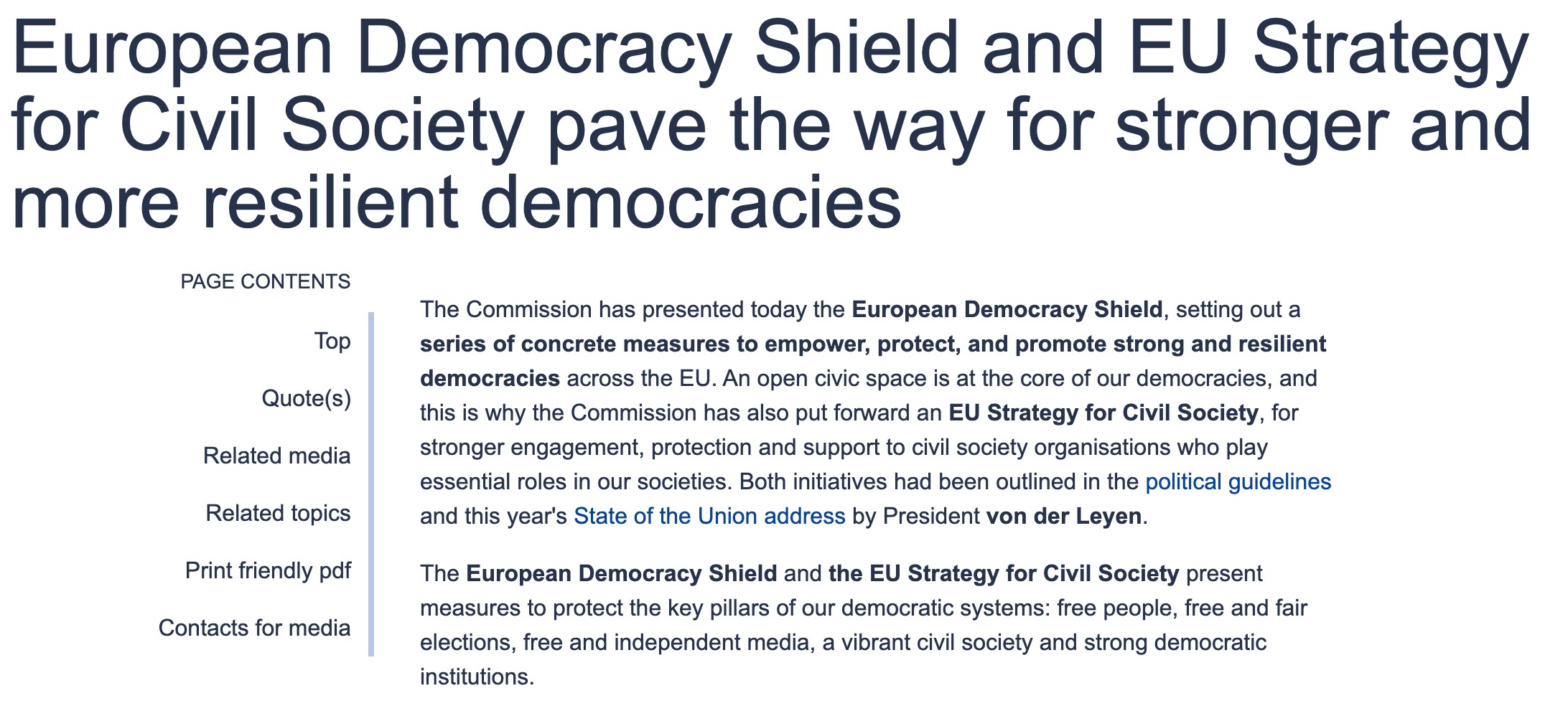
European Democracy Shield
BrusselsThe European Democracy Shield and the EU Strategy for Civil Society present measures to protect the key pillars of our democratic systems: free people, free and fair elections, free and independent media, a vibrant civil society and strong democratic institutions.

NY State Assembly Bill 2025-A1417
Albany, NYThe State of New York passed a bill outlawing the use of algorithmic pricing by landlords to determine rent prices. Score one for not using AI to make bad things (the housing and cost of living crises) worse!

The Freedom of Information Act (FOIA)
Washington, DCThe basic function of the Freedom of Information Act is to ensure informed citizens, vital to the functioning of a democratic society.

AN ACT of Parliament to provide for the conduct of public participation; to give effect to the constitutional principles of democracy and participation of the people...
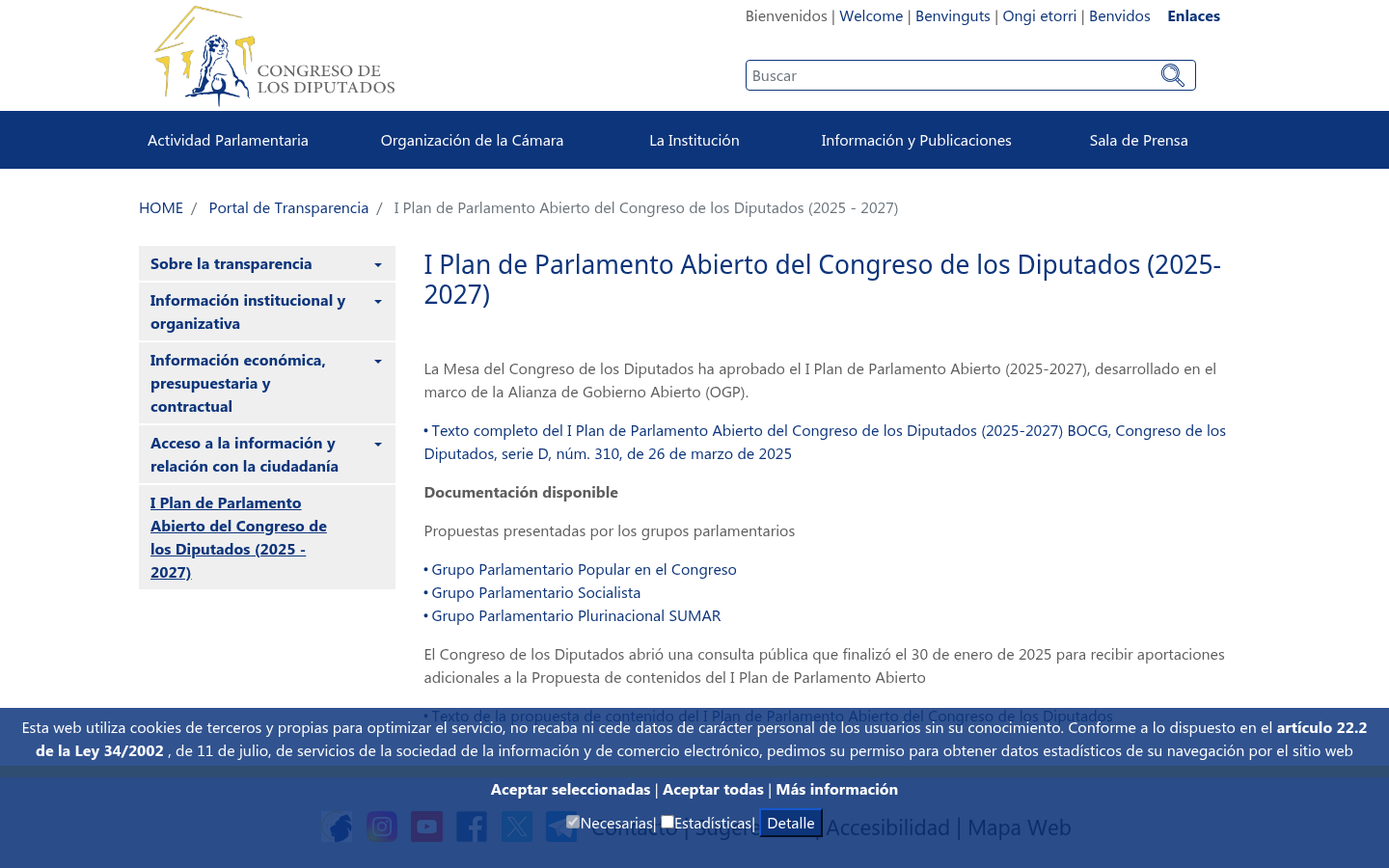
La Mesa del Congreso de los Diputados ha aprobado el I Plan de Parlamento Abierto (2025-2027), desarrollado en el marco de la Alianza de Gobierno Abierto (OGP).
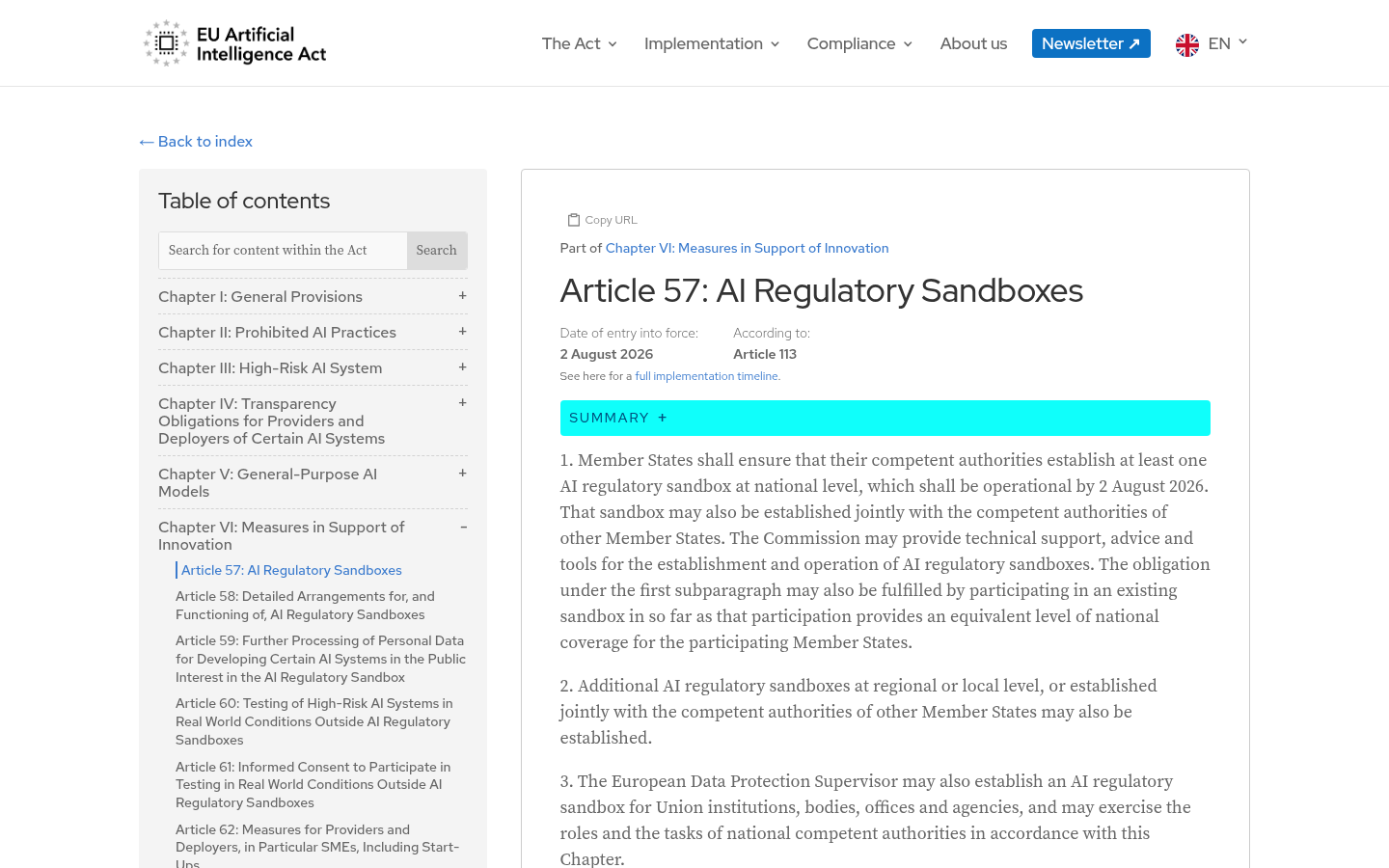
EU AI Act Article 57: AI Regulatory Sandboxes
European Union (EU)Legislation requiring Member States to establish AI regulatory sandboxes

Informationsfreiheitsgesetz
Germany (Deutschland) 🇩🇪Das Informationsfreiheitsgesetz (IFG) schafft einen voraussetzungslosen Anspruch auf Zugang zu amtlichen Informationen bei Behörden des Bundes.

Escazú Agreement
Latin AmericaThe Regional Agreement on Access to Information, Public Participation and Justice in Environmental Matters in Latin America and the Caribbean, better known as the Escazú Agreement (Spanish: Acuerdo de Escazú), is an international treaty signed by 25 Latin American and Caribbean nations concerning the rights of access to information about the environment, public participation in environmental decision-making, environmental justice, and a healthy and sustainable environment for current and future generations.

Levelling-up and Regeneration Act 2023 Bill
United Kingdom of Great Britain and Northern Ireland 🇬🇧Requiring open digitalisation and publication of planning data in the UK

Wet open overheid (Woo)
Netherlands (Nederland, Holland) 🇳🇱The Netherlands's open government act

Observatorio Regional: Legislación en Libertad de Expresión en América Latina

Tromsø Convention (Council of Europe Convention on Access to Official Documents)
Norway (Norge, Noreg) 🇳🇴The Tromsø Convention is the first binding international legal instrument to recognize a general right of access to official documents held by public authorities.

La Ley 19/2013, de 9 de diciembre, de Transparencia, Acceso a la Información Pública y Buen Gobierno (texto consolidado), tiene por objeto ampliar y reforzar la transparencia de la actividad pública, regular y garantizar el derecho de acceso a la información relativa a aquella actividad y establecer las obligaciones de buen gobierno que deben cumplir las personas que ejercen una responsabilidad pública.

Bundesgesetz über den Einsatz elektronischer Mittel zur Erfüllung von Behördenaufgaben (EMBAG)
Switzerland (Schweiz, Suisse, Svizzera) 🇨🇭Swiss law requiring government agencies disclose their source code when possible.

Caught in the Web (CitW)
Colombo, Sri LankaCaught in the Web (CitW) is a 26 month initiative supported by the Foreign and Commonwealth Development Office United Kingdom where Search for Common Ground, Hashtag Generation, and Centre for Equality and Justice work as a consortium to advance effective responses to gendered online hate speech and cyber sexual and gender based violence in Sri Lanka.

S.4495 - A bill to enable safe, responsible, and agile procurement, development, and use of artificial intelligence by the Federal Government, and for other purposes.

Bipartisan legislation that would require government agencies to share custom-developed source code with each other—thereby avoiding duplicative government contracts to build software.

LupaMundi
Brazil (Brasil) 🇧🇷O LupaMundi - Mapa das Legislações sobre Desinformação é um mapa interativo que apresenta as leis nacionais de combate à desinformação.

Fundusz sołecki
Poland (Polska) 🇵🇱Polish law institutionalizing the "Village Fund" form of participatory budgeting, first in rural areas and later required for the 66 largest cities

The Copenhagen Pledge on Tech for Democracy
CopenhagenA commitment to make digital technologies work for, not against, democracy and human rights. It underlines the joint responsibility of governments, multilateral organizations, civil society, and technology companies to develop and use digital technologies to the benefit of democracy and human rights.

21st Century Integrated Digital Experience Act
Washington, DCThe bill’s sponsor, Representative Ro Khanna, summed it up by saying, “Government exists to serve citizens, and this bill ensures government leverages available technology to provide cohesive, user-friendly online service that people around this country expect and deserve.”
.png)
El Avispero
BogotáWe are a platform of more than 140 thousand activists, organizations and groups that mobilize to transform behaviors and attitudes, generating influence in public policies and thus building a more tolerant, fair, sustainable, inclusive and participatory country.

Executive Order on Modernizing Regulatory Review
1600 Pennsylvania Avenue Northwest, Washington, DCUS White House order including addressing AI generated public comments

A UN resolution in favor of ICTs for Sustainable Development

Onlinezugangsgesetz (OZG)
Germany (Deutschland) 🇩🇪Law requiring digitization of German government. Die Interaktion zwischen Bürgerinnen, Bürgern und Unternehmen mit der Verwaltung soll in Zukunft deutlich schneller, effizienter und nutzerfreundlicher werden.

The European Union developed a Code of Practice on Disinformation based on the findings of its High Level Working Group on the issue.

Poynter's global guide on existing attempts to legislate against what can broadly be referred to as online misinformation

Global Right to Information Rating
Canada 🇨🇦A global map ranking countries by their Freedom of Information laws

NYC law: Reporting on algorithmic tools used by city agencies.
New York City Council, Broadway, New York, NYA Local Law to amend the administrative code of the city of New York, in relation to reporting on algorithmic tools used by city agencies


The 21st Century Integrated Digital Experience Act
United States CapitolThe 21st Century Integrated Digital Experience Act (IDEA) requires all government-produced digital products, including websites and applications, to be consistent, modern, and mobile-friendly.

US open data legislation
United States of America 🇺🇸The U.S. Open Data Toolkit is a digital resource that helps federal policymakers better understand and harness the strategic value of open data.

The Digital Bill
France 🇫🇷The Government clearly highlighted the modifications made to the text following this consultation, in order to facilitate the follow-up of proposals from different contributors.
Get email updates
Helpful Links
Reach Out
A project of

With support from
National Endowment for Democracy
Founding Organization
Civic Hall
Technology partner

 Civic Tech Field Guide