Civic Tech Field Guide
Sharing knowledge and productively growing the fieldTag: Format > books - (105)
Showing 105 Results
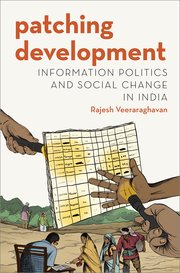
Patching Development: Information Politics and Social Change in India
India (Bhārat) 🇮🇳Book by Rajesh Veeraraghavan

Successful integration of generative AI for civic engagement must be powered by people who use their judgment to validate outputs, mitigate potential errors, contextualize results, and build trust between the government and the community.

Generative AI for Pro-Democracy Platforms
Cambridge, MAOnline discourse faces challenges in facilitating substantive and productive political conversations. Recent technologies have explored the potential of generative AI to promote civil discourse, encourage the development of mutual understanding in a discussion, produce . . .

Exploring Parliament
United Kingdom of Great Britain and Northern Ireland 🇬🇧A fresh perspective on the work, impact, and relevance of UK Parliament, combining academic and practitioner perspectives with evidence based case studies to reveal what really goes on behind the scenes.

Pixi Bücher
BonnYou can't start early enough – that's why we have short Pixi books on the topics of privacy and transparency for kindergarten-age children.

Political Automation: An Introduction to AI in Government and its Impact on Citizens
New York City (NYC / New York, NY)Book by Eduardo Albrecht

With this guide, you'll have access to key information on over 2,000 grant-makers, each with the potential to give at least £50,000 per year. (£135.00)

by Rahul Bhargava

The first sustained, detailed philosophical defense of using lotteries, rather than elections, to select political representatives

Proudly Serving
United States of America 🇺🇸A guide to public service in the digital age

New Democratic Initiatives in Authoritarian Twenty-First Century Latin America uses a multidisciplinary approach to understand the coincidence of emerging social movements, seeking more meaningful forms of democratic participation, on the one hand, and the rise of new authoritarian politics that in part rely on chaos and disorder as mechanisms of domination, on the other.

It provides a comprehensive look at AI applications in legislative drafting, procedural guidance, historical archiving, and citizen engagement, supported by real-world case studies illustrating practical implementations.

Open access book by Xabier E. Barandiaran, Antonio Calleja-López, Arnau Monterde, and Carol Romero

The Tech Coup: How to Save Democracy from Silicon Valley
United States of America 🇺🇸An insider offers a “forceful critique...of Big Tech's steady erosion of democracy” (The New Yorker) and describes what must be done to stop it

Why grassroots data activists in Latin America count feminicide—and how this vital social justice work challenges mainstream data science.


The temporal and spatial intersection of information and telecommunication technologies, creative and knowledge economies, and related new manufacturing systems, has been leading to significant effects on urban socioeconomic and spatial configurations and public policies. Specifically, the post-crisis emergence of innovative workplaces to accommodate these changes, is creating socioeconomic and spatial features that are only recently beginning to be explored in the scholarly literature. According to this scenario, this edited book offers a variety of avenues for exploring the relationships between contemporary production activities and new workplaces in several urban contexts. In particular, it focuses on the consequences of these relationships in terms of regeneration of the urban fabric, as well as on their implication in terms of urban policies. This book represents early observation of the fast-growing phenomenon of new productive activities and workplaces against the background of the gig economy and sharing economy paradigms. Central to this discussion is the investigation of the connection between digital technologies, new works and workplaces, and urban change processes and projects, by providing an additional contribution to new urban agendas for contemporary cities. The chapters originally published as a special issue in the Journal of Urban Technology.
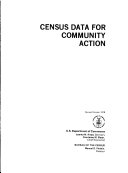
Describing data coverage for U.S. small communities via Census Bureau publications

This book explores the challenges that disinformation, fake news, and post-truth politics pose to democracy from a multidisciplinary perspective
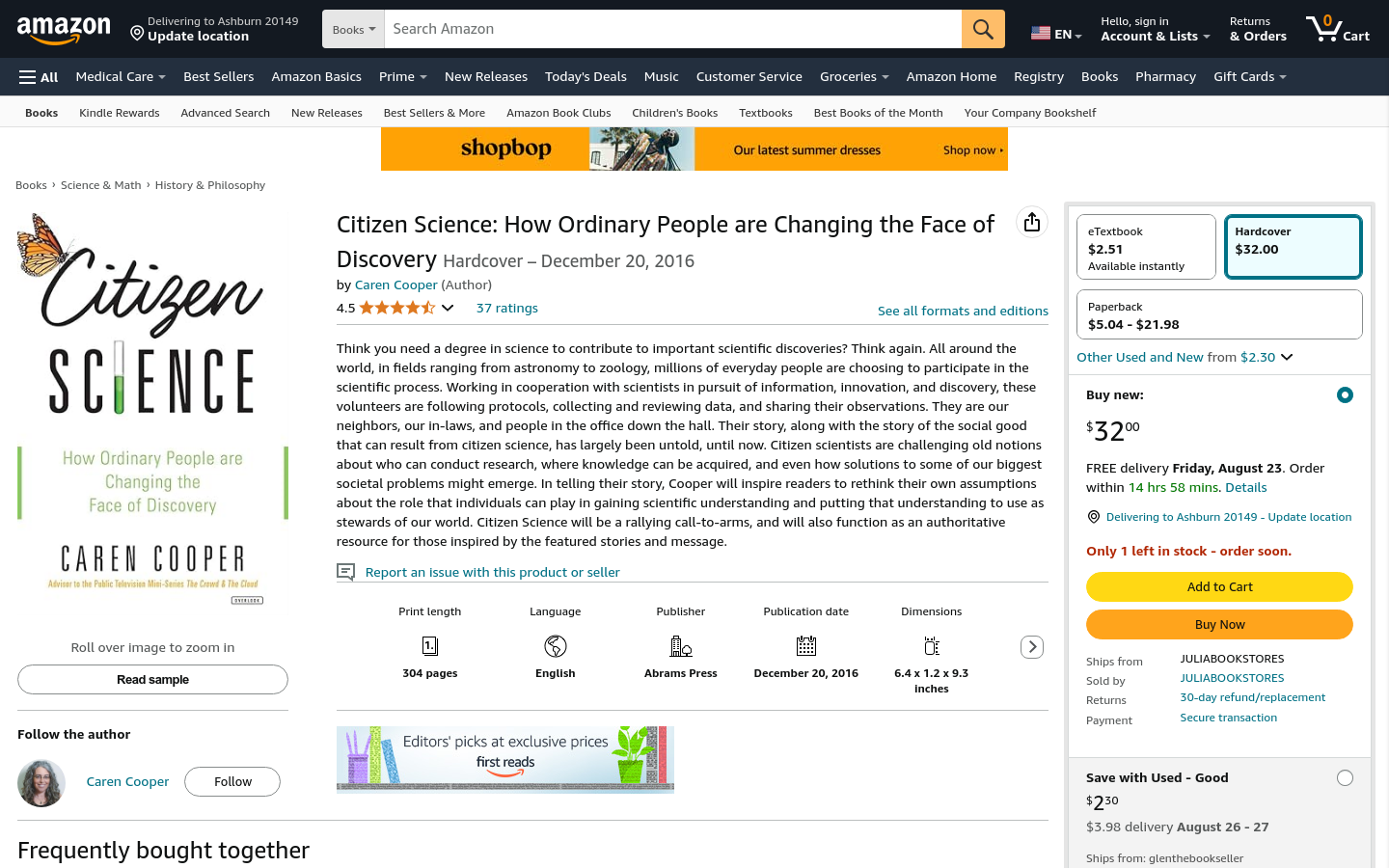
They’re our neighbors, in-laws, and coworkers. Their story, along with the story of the social good that can result from citizen science, has largely been untold, until now.

In democratic societies there is widespread acknowledgment of the need to incorporate citizens’ input in decision-making processes in more or less structured ways.

Mair examines how we interpret the evidence of change and stability in modern parties and party systems
The relationship between citizens and city governments is gradually transforming due to the utilization of advanced information and communication technologies in order to inform, consult, and engage citizens.

Resource guide for children for learning political action skills that can help them make a difference in solving social problems at the community, state, and national levels.
Search results for information on "Contemporary Social Movements" by Jerome Davis.

Using numerous cities from different regions around the globe, the book compares how smart cities of different sizes are evolving in different countries and continents.
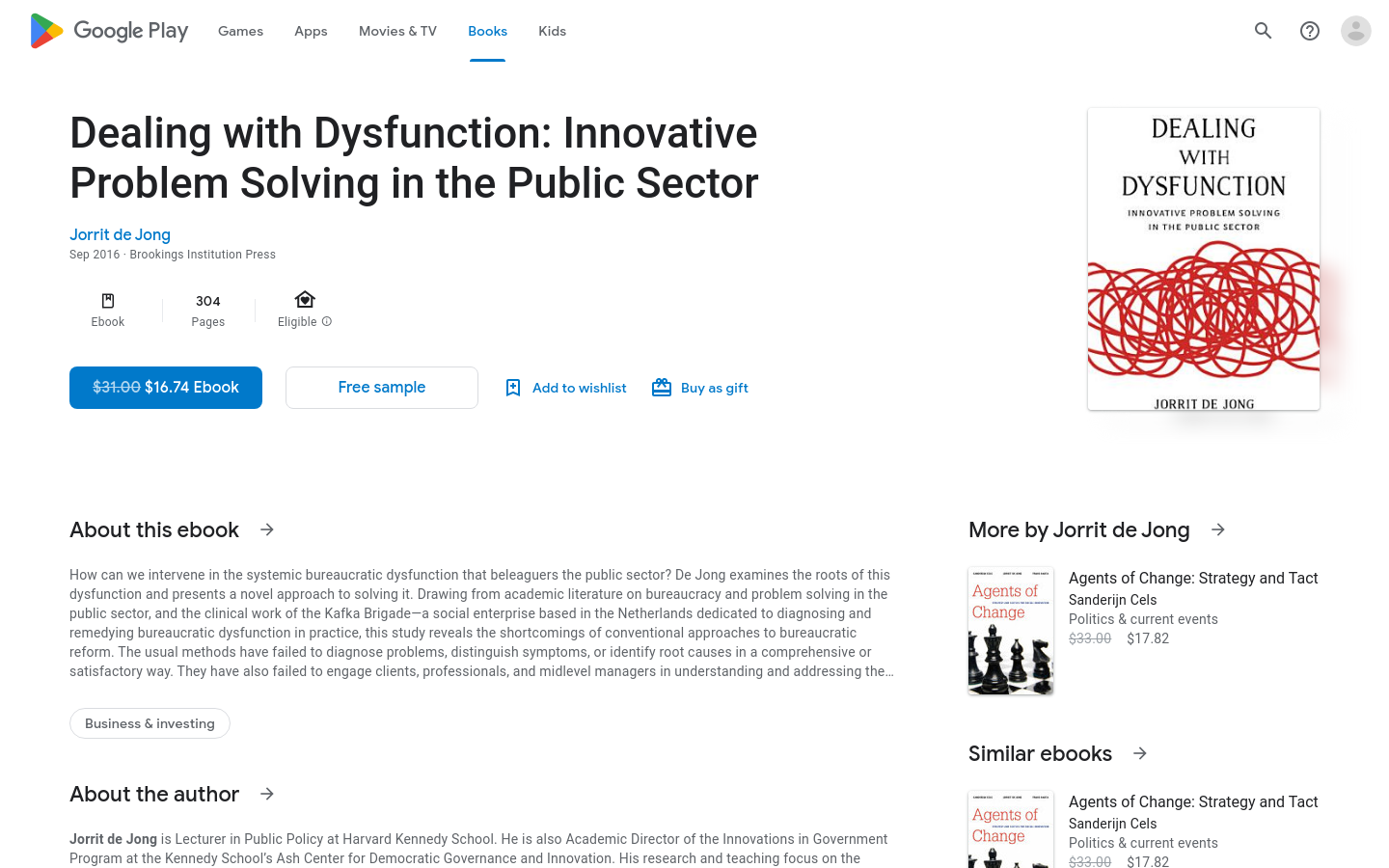
This book offers conceptual frameworks, theoretical insights, and practical lessons for dealing with the problem
Is this true? In Uneven Innovation, Jennifer Clark considers the potential of these emerging technologies as well as their capacity to exacerbate existing inequalities and even produce new ones

This book tells the story of radical transparency in a datafied world.
I love this book! At a time in which activism must urgently rise to be a much more effective tool for systems change, Mueller gives us a deeply researched yet practical reference book to methodically take activism from passion to impact

A San Francisco Chronicle Best Book of 2016: “Intelligent and impassioned, Citizen Scientist is essential reading for anyone interested in the natural world

Data and Society: A Critical Introduction investigates the growing importance of data as a technological, social, economic and scientific resource.

Digital Democracy considers how technological developments might combine with underlying social, economic and political conditions to produce new vehicles for democratic practice. The growth of new Information and Communication Technologies (ICTs) such as the Internet, alongside growing concerns about the failure of advanced societies to live up to the democratic idea, has produced much interest in the prospects for a digital democracy. This book will provide invaluable reading for those studying social policy, politics and sociology as well as for policy analysts, social scientists and computer scientists.

In Democracy 2.0, we feature a series of evocative, international case studies that document the impact of alternative and community use of media, in general, and Web 2.0 in particular.

Highlighting a wide range of topics including community inclusion, cultural innovation, and public safety, this book is ideally designed for urban planners, entrepreneurs, engineers, government officials, policymakers, academicians, ...

Digital Democracy: Political Participation and Citizen Engagement Through the Internet
United Kingdom of Great Britain and Northern Ireland 🇬🇧This Library Note provides an overview of developments around citizens’ political engagement and participation through the internet.

Institutional inertia, nevertheless, causes large delays in updating and adapting


By Alan R. Shark, with ChatGPT, Google Gemini, Perplexity AI

The Future of Collaborative Technology and Democracy
Civic Tech Report 2025
PragueHardcover book and online platform providing an overview of over 80 solutions from the European civic tech ecosystem

By Aure Schrock. Out in September. The first detailed history of Code for America that examines how democratically designed government systems can collectively improve technology's impact on society.

From the upheavals of recent national elections to the success of the #MyDressMyChoice feminist movement, digital platforms have already had a dramatic impact on political life in Kenya – one of the most electronically advanced countries in Africa.

A Beginner’s Guide to Finding User Needs: A Practical Guide to User Research Methods
Germany (Deutschland) 🇩🇪A free/libre book about UX research with qualitative methods on user motivations, activities, and problems, by Jan Dittrich

Mehr Freiheit und mehr Demokratie waren die großen Versprechen des Internets.

Editors: Hans Jochen Scholl, Eric E. Holdeman, F. Kees Boersma

Wir holen euch ab! Wie wir durch Bürgerräte und Zufallsauswahl echte Vielfalt in die Demokratie bringen
Germany (Deutschland) 🇩🇪Dabei haben sich Katharina Liesenberg und Linus Strothmann vom Team Es geht LOS einer jahrtausendealten, urdemokratischen Methode bedient: des Losens

How political parties have changed in the age of social media
Get email updates
Helpful Links
Reach Out
A project of

With support from
National Endowment for Democracy
Founding Organization
Civic Hall
Technology partner

 Civic Tech Field Guide