Civic Tech Field Guide
Sharing knowledge and productively growing the fieldThe People > Build something > Building in the private sector > Supporting public sector from outside government - (72)
Projects providing innovative solutions, software, or just additional resources to enhance the efficiency, accessibility, and effectiveness of public services, without being directly managed or implemented by governmental entities. This list is intended for projects supporting specific public sector initiatives, rather than more abstract concepts.
Showing 72 Results
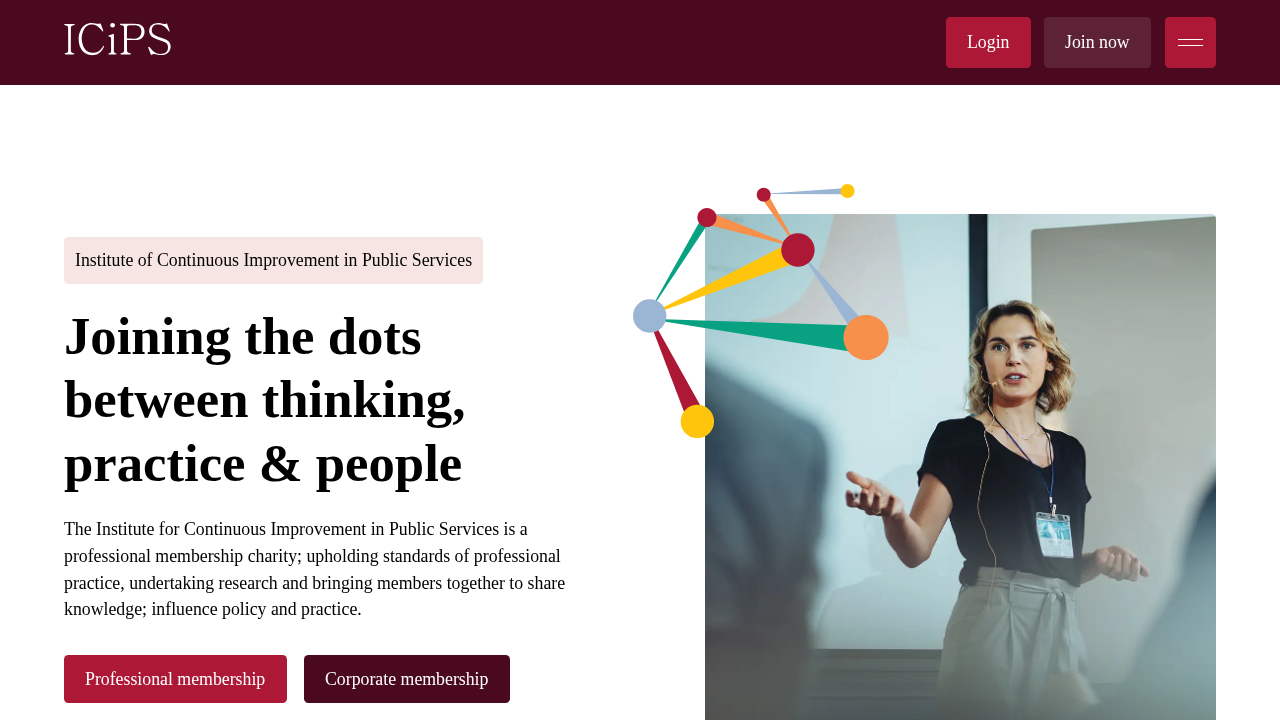
Institute for Continuous Improvement in Public Services (ICIPS)
United Kingdom of Great Britain and Northern Ireland 🇬🇧The Institute for Continuous Improvement in Public Services is a professional membership charity; upholding standards of professional practice, undertaking research and bringing members together to share knowledge; influence policy and practice.
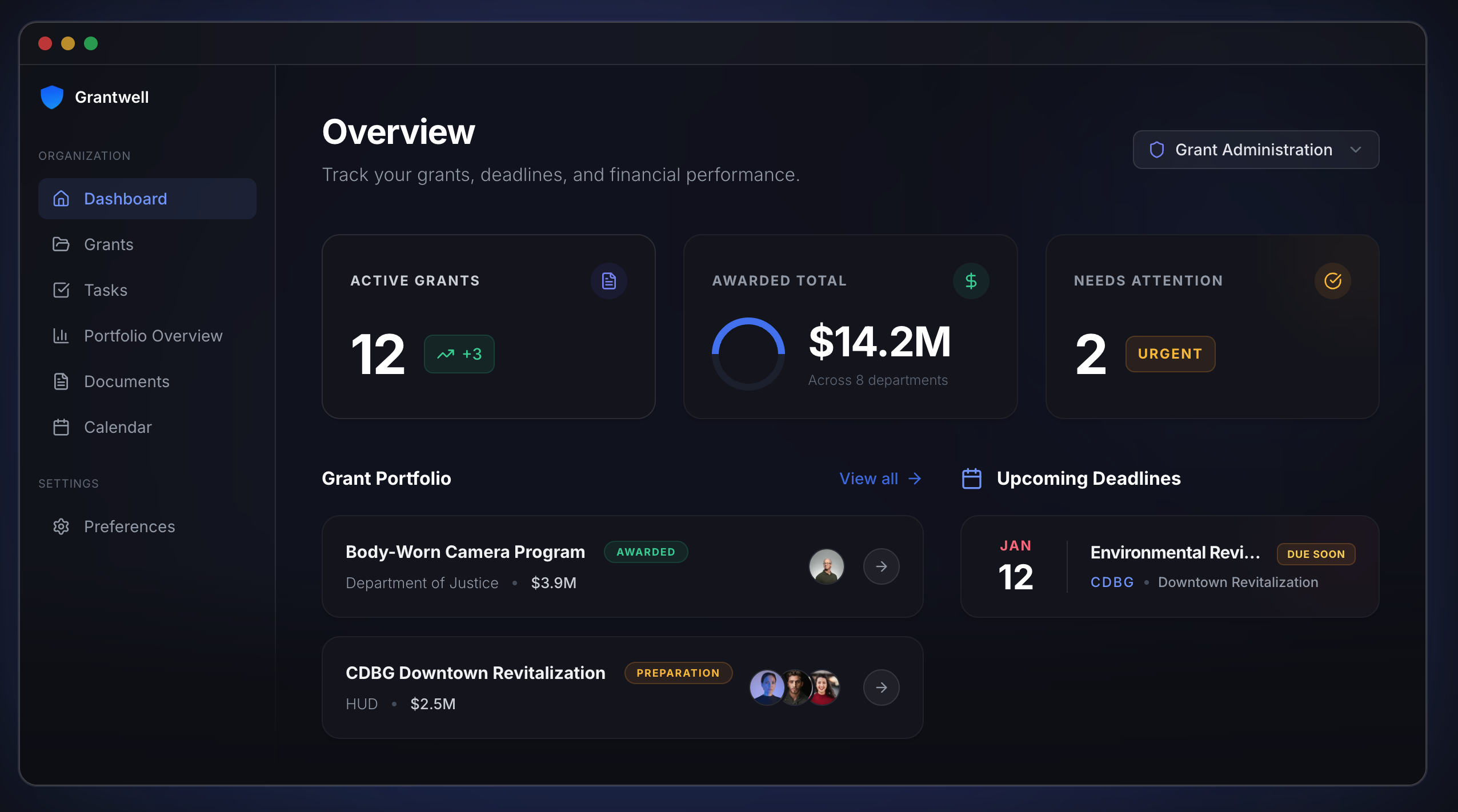
Civic Future Talent Programmes
United Kingdom of Great Britain and Northern Ireland 🇬🇧We need bold, highly talented people to be the next generation of MPs, advisers, civil servants, commentators, or something else entirely.
By analyzing how public employees learn, use, and adapt AI at work, the Observatory aims to identify which investments in skills and training strengthen government capacity, improve services, and deliver better outcomes for residents.
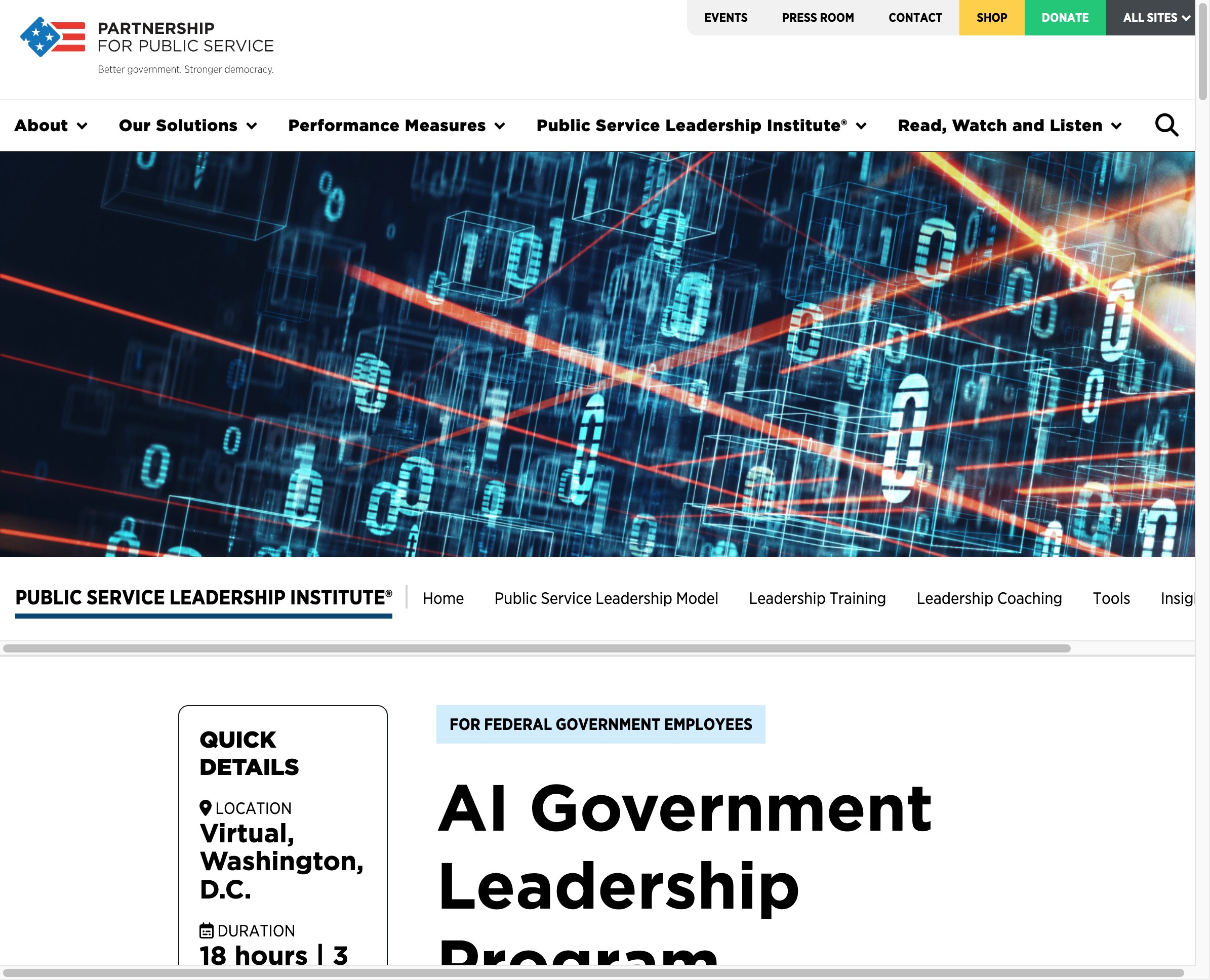
AI Government Leadership Program
Washington, DCWith support from Microsoft and Google.org, we are creating a cohort of senior leaders across government who are prepared to guide their agencies’ AI strategy.

Created to help state governments navigate the rapid rise of artificial intelligence.

Recoding America Fund
Washington, DCA six-year bipartisan effort to strengthen America by building the government we need to compete globally and serve citizens effectively.
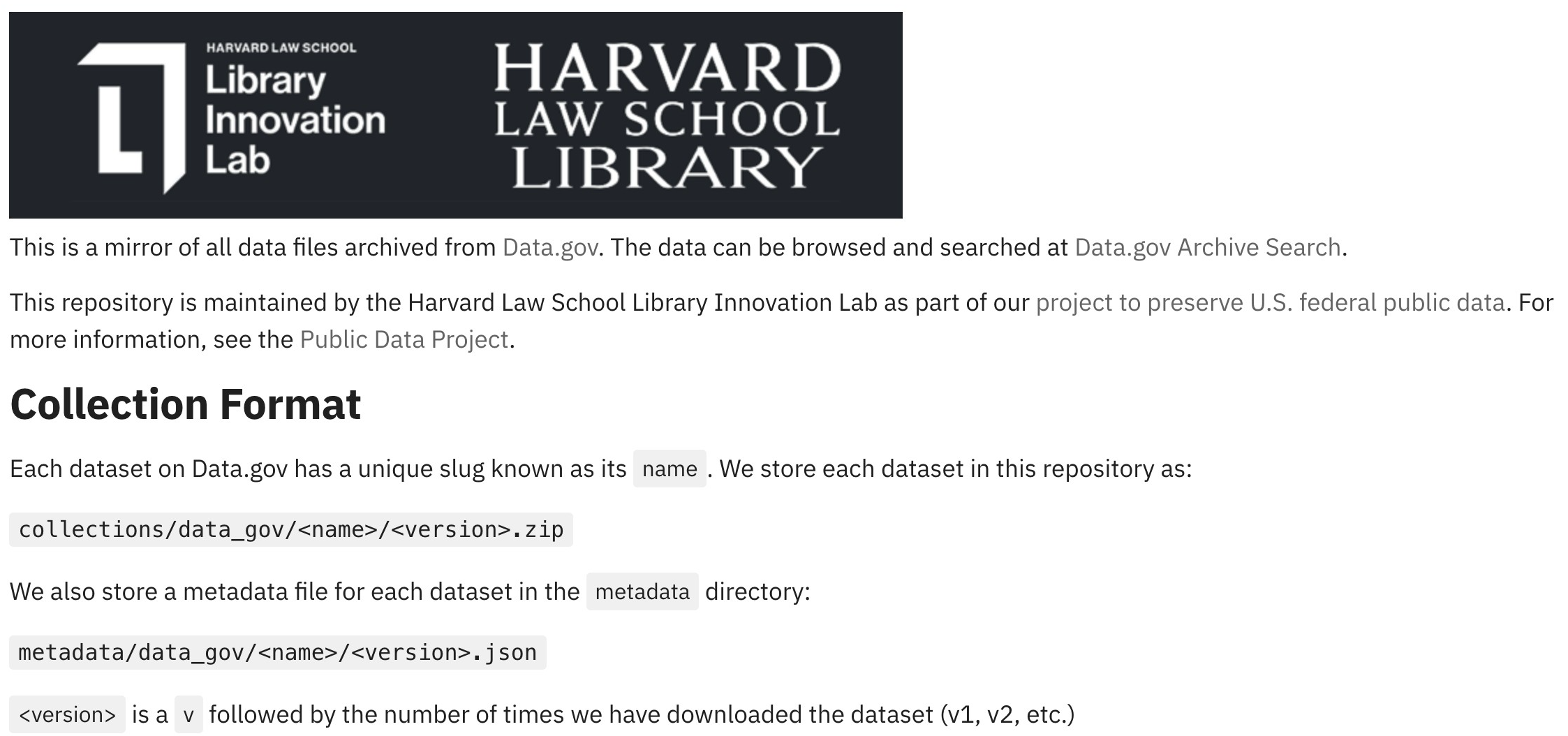
Archive of Data.gov
Harvard University, Cambridge, MAThis repository is maintained by the Harvard Law School Library Innovation Lab as part of our project to preserve U.S. federal public data.
Democracy Works 250
Washington, DCDemocracy Works 250 is a new initiative from Democracy Forward that is building the foundations of a democracy that works for all of us.

Digital Parliaments Project
United States of America 🇺🇸The Digital Parliaments Project (DPP) is an initiative of POPVOX Foundation that aims to support legislatures around the world as they modernize to remain strong and resilient into and beyond the 21st century.

The site has onboarded 40+ governments (plus CERN) to its free service scanning government domains for data breaches
Departure Dialogues Project
United States of America 🇺🇸POPVOX Foundation, the Niskanen Center, Civil Service Strong, the Partnership for Public Service and the Foundation for American Innovation invite departing federal employees to share your insights to help inform future Congressional action to strengthen federal programs.

InnovateUS
BostonInnovateUS provides no-cost, at-your-own-pace, and live learning on data, digital, innovation, and AI skills for public service professionals like you.

Better Politics Foundation
BerlinWe focus on equipping courageous leaders with new tools and ideas to reimagine political systems.

Local Policy Lab
San Diego, CAThe Local Policy Lab accelerates the adoption of effective solutions to pressing problems at the local governmental level.

NHS Hack Day
United Kingdom of Great Britain and Northern Ireland 🇬🇧Geeks who love the NHS
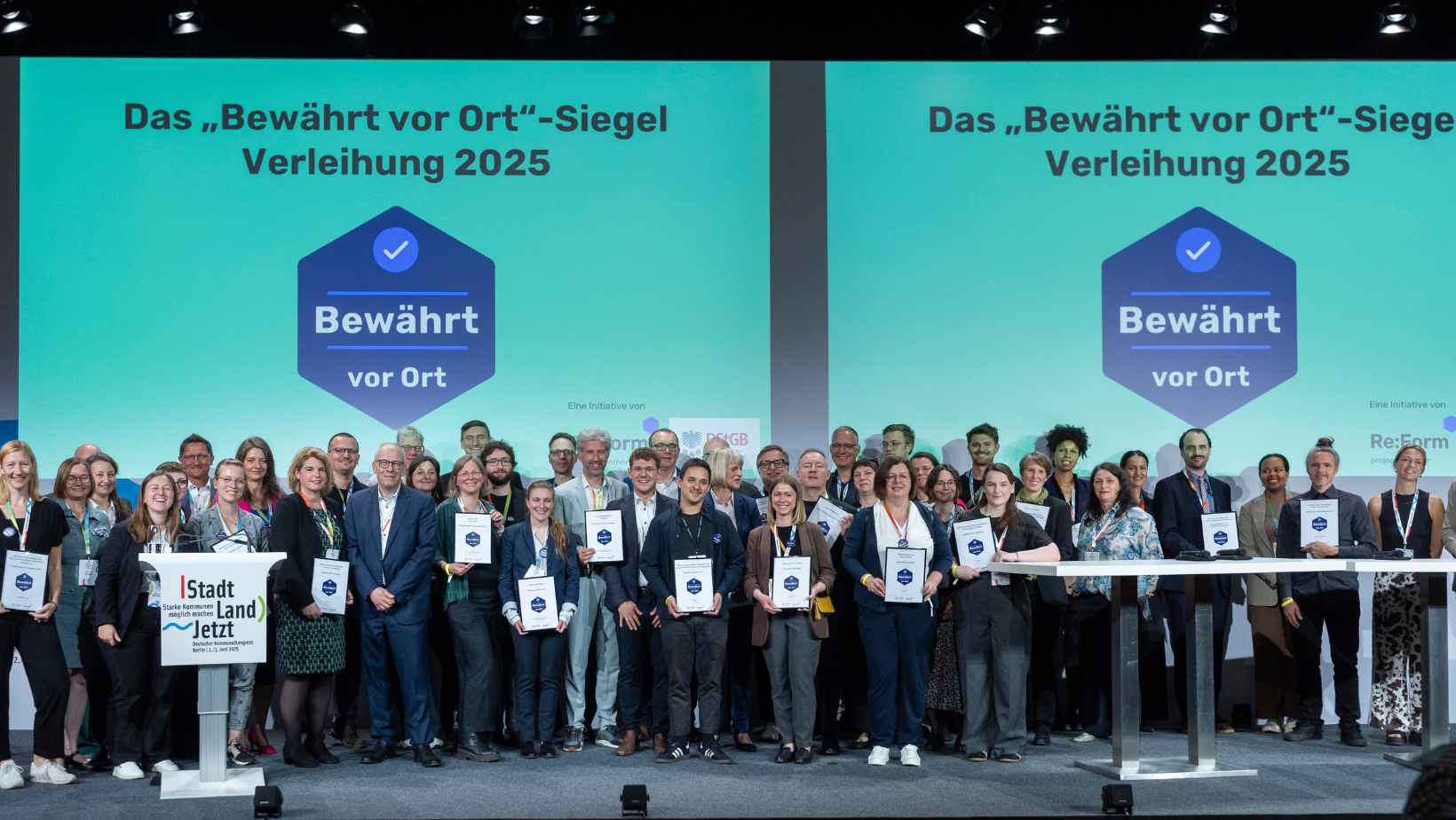
Bewährt vor Ort
Germany (Deutschland) 🇩🇪Ausgezeichnet werden kommunale Projekte, die in der Praxis nachweislich funktionieren und das Potenzial haben, bundesweit als Vorbild zu wirken.


Pilot Pitchfest
New York City (NYC / New York, NY)We match New York City agencies to local researchers and technical assistance from civic society

Productive Ways to Use GenAI for Civil Servants
2300 N Street Northwest, Washington, DC 20037This playbook is designed specifically for civil servants, offering practical guidance for using generative AI (GenAI) to help them perform their work more effectively and efficiently.

Tax Break Tracker
Washington, DCDiscover What Localities Lose to Corporate Tax Abatements.
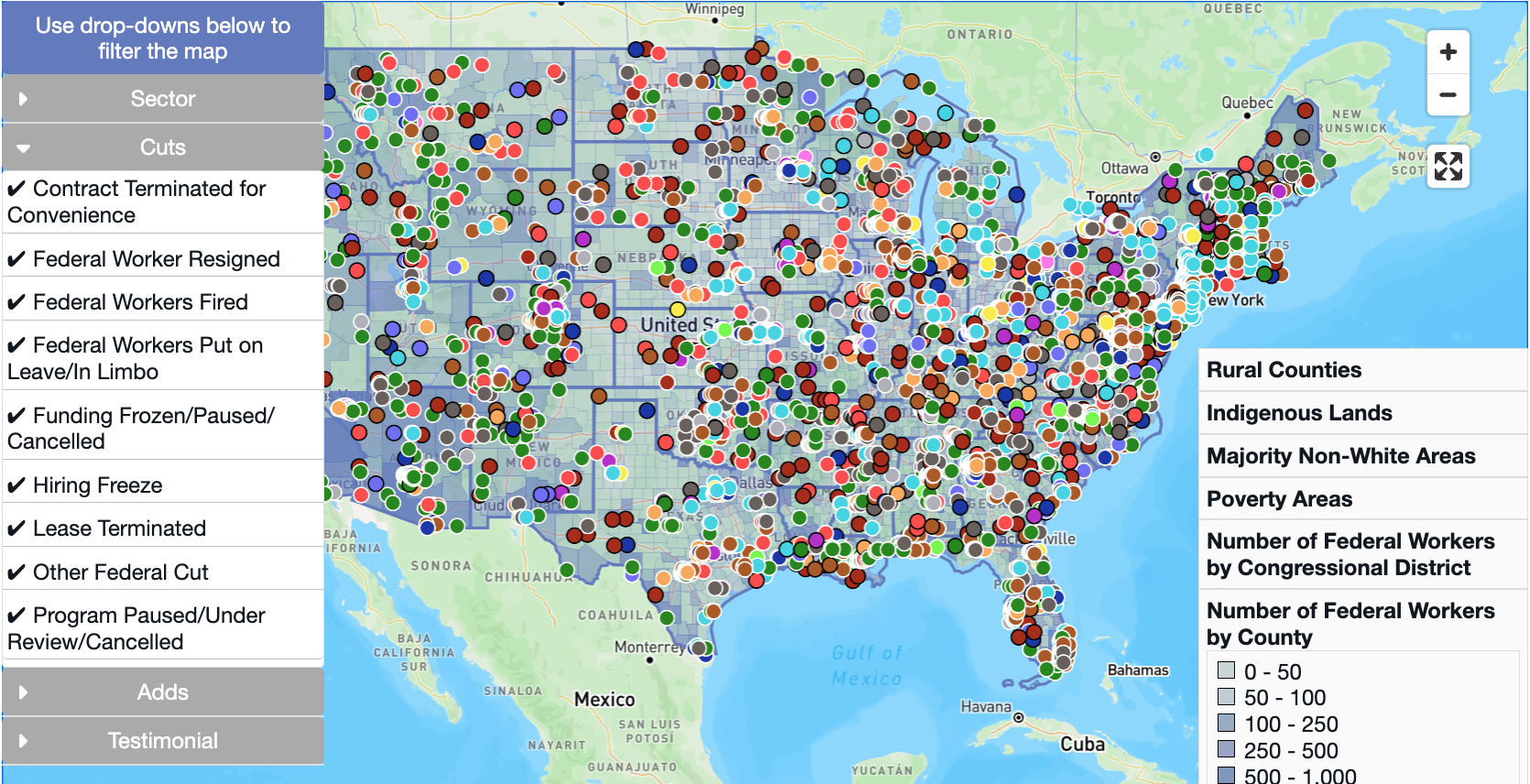
The Impact Map
United States of America 🇺🇸The Impact Map provides timely data—as it becomes available—on policy, funding, and workforce changes and their localized effect. This tool is currently in beta and will continue evolving, so you may find areas that need updating.

The Impact Project
United States of America 🇺🇸The Impact Project provides objective, transparent, and open-source data to help explain how federal policies, funding, and workforce changes affect our communities.

Public Rights Project
OaklandSince 2017, we've recovered over $46 million in relief for marginalized people; built a network of over 1,300 government offices, elected officials, and community-based organizations in 50 states; trained 130 prosecutors and government lawyers in 24 states; and secured court victories on abortion, immigrant, workers’, and voting rights

Ridiculously Hopeful Futures
CaliforniaRidiculously Hopeful Future: a bold, slightly wild, and very optimistic project to transform how government social safety net programs are designed.

The People Lab
Harvard University, Cambridge, MAProducing cutting-edge research on the people of government and the communities they are called to serve.

Ever wonder, “How can civic tech help improve government service delivery?” If so, check out this new research from the Canadian Digital Service! It includes 5 case studies of partnerships between the Canadian government and civic tech groups, plus tools to assess if civic tech might be a good partner for a government initiative. Find it here: https://digital.canada.ca/2025/01/23/how-can-civic-tech-help-improve-government-service-delivery/
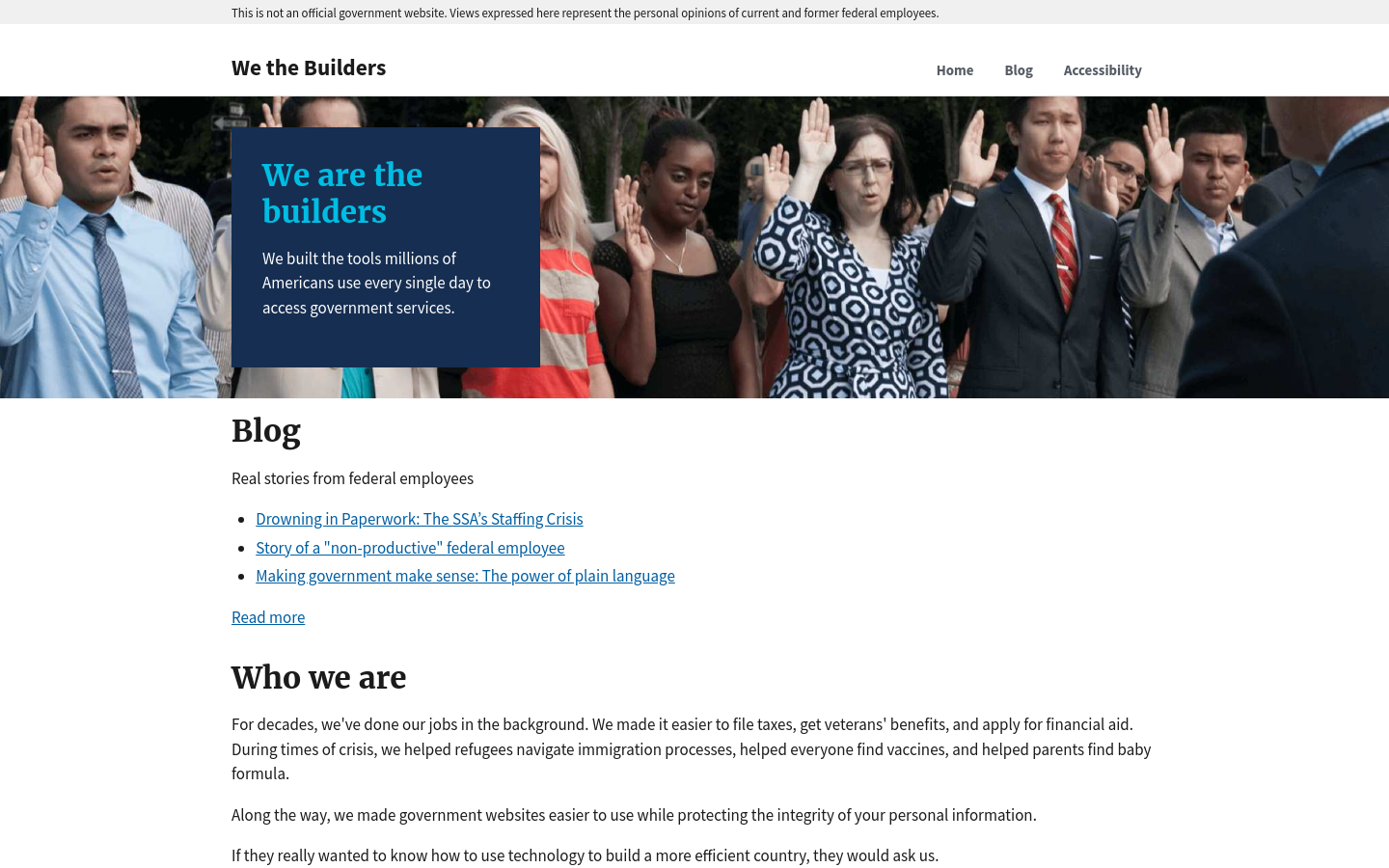
We the Builders (alt USDS)
Washington, DCHere, you'll find stories from real government employees: How we save you time and money, how we protect your personal information, and how DOGE's dangerous dismantling of government technology puts you at risk.

Local Government Information Unit (LGiU)
United Kingdom of Great Britain and Northern Ireland 🇬🇧An independent, local authority membership organisation supporting councils around the world.

People, organizations, and communities across the country are joining together to ensure our civil servants have resources if they are targeted or attacked.

News, Information, & Discussion for Federal Employees

Proudly Serving
United States of America 🇺🇸A guide to public service in the digital age

Escuela Política y de Liderazgo Público
Asunción, ParaguayLa Escuela Política y de Liderazgo Público está conformada por Academias que buscan brindar herramientas personales, teóricas y prácticas a personas con vocación de servicio público interesadas en transformar su contexto.

Academia Táva Apo
Asunción, ParaguayPor segundo año consecutivo, y con el apoyo de la National Endowment For Democracy, culminamos exitosamente la Academia Táva Apo – Hacia el desarrollo local, programa de formación dirigido a líderes comunitarios y concejales electos.

European Public Sector Award (EPSA)
MaastrichtEPSA – the European Public Sector Award – is a Europe-wide award scheme for public sector entities at all levels of government which has been organised every two years since 2009 by the European Institute of Public Administration (EIPA).

Resources and Tools for Legislators and Staff

Working for an MP (w4mp)
Parliament Square, London, UKThe Working for an MP website is a resource for anyone working for a British Member of Parliament or with an interest in how Parliament works.

Funded by the European Commission Directorate-General for Structural Reform Support (DG REFORM) and implemented by UNESCO, this project supports the Flemish government in implementing reforms by contributing to the improved AI-readiness and increased adoption of AI across the Flemish public administrations in a safe and ethical manner.

Public Technology Institute (PTI)
United States of America 🇺🇸Actively supporting local government technology leaders and their teams through research & content, professional development, consulting services, learning and networking events, membership, workforce connections and recognition programs.

SAMbot
Canada 🇨🇦Our SAMbot project measures abusive content that candidates and political parties receive online during Canadian elections.

We are a non-profit that partners with state criminal justice agencies to advance their use of data and reduce incarceration.

Institute for Security and Technology
United States of America 🇺🇸We design and advance solutions to the world's toughest emerging security threats

Examples of Civic Tech Communities-Governments Collaboration Around The World
Taiwan (T'ai-wan) 🇹🇼This publication showcases how governments and civic tech communities around the world can work together to build digital services and projects.

Digital Service Network
The George Washington University, I Street Northwest, Washington, DCDocumenting methodologies of digital service teams in state, local, tribal, and territorial government.

Skills Wiki for New Government Hires
Aspen Institute, North 3rd Street, Aspen, COA comprehensive set of resources to help new techies in government hit the ground running on day one.

European Citizen Action Service
BrusselsThe European Citizen Action Service (ECAS) is an international, Brussels-based non-profit organisation with a pan-European membership and more than 30 years of experience.

Research, training, support and awards to promote citizen-centred public sector service to Canadians

Hâck The Hague
The HagueThe municipality has been organising the Hâck The Hague hacking competition since 2017. During Hâck The Hague ethical hackers try to penetrate the municipality's computer systems. This is how they test the digital security of The Hague.
Get email updates
Helpful Links
Reach Out
A project of

With support from
National Endowment for Democracy
Founding Organization
Civic Hall
Technology partner

 Civic Tech Field Guide