Civic Tech Field Guide
Sharing knowledge and productively growing the fieldThe Tech > Govtech - (879)
In the Civic Tech Field Guide, we primarily focus on examples of govtech that seek to improve society to make it more just and democratic, not just more digital or efficient. We recognize that this is a subjective, values-based perspective of govtech. There is a much larger government IT industry that exceeds this focus.
Showing 879 Results

GOV.UK document digitization tool
United Kingdom of Great Britain and Northern Ireland 🇬🇧A new AI tool aims to modernise council planning by replacing outdated paper systems with high-quality digital data, enabling faster, smarter decisions to support the government’s goal of building 1.5 million homes.

Open Government Products (Singapore)
Singapore 🇸🇬Explore 40 over products built for citizens and public officers

Gov-X
Laos, the People's Democratic Republic of 🇱🇦"We wanted to make it a one-stop digital platform, integrating all the essential public services across ministries… with one application, citizens can access several services online, which modernises our governance"

Boston Consulting Group report

Magic Notes
United Kingdom of Great Britain and Northern Ireland 🇬🇧Transform social workers' productivity with AI


Das neue Ministerium wird Motor sein für konkrete, sichtbare Fortschritte bei der Digitalisierung und eine moderne, handlungsfähige Verwaltung.

Levelling-up and Regeneration Act 2023 Bill
United Kingdom of Great Britain and Northern Ireland 🇬🇧Requiring open digitalisation and publication of planning data in the UK

Docs
Western EuropeDocs is the result of a joint effort lead by the French 🇫🇷🥖(DINUM) and German 🇩🇪🥨 governments (ZenDiS).

Open Digital Planning
United Kingdom of Great Britain and Northern Ireland 🇬🇧A community of forward-thinking Local Planning Authorities working together to shape a more efficient, data-driven planning system.

The Lead Service Line Replacement Cost Calculator™ (LSLRCC) is a free tool supporting the replacement of 9.2 million lead service lines across the United States—a critical public health effort with costs that could exceed $100 billion—helping municipalities plan cost-effective replacements, potentially saving billions and protecting health.

Connecticut Governor's Fellowship
Hartford, CTThe Connecticut Governor’s Fellowship Program offers a unique opportunity to serve at the forefront of public innovation.
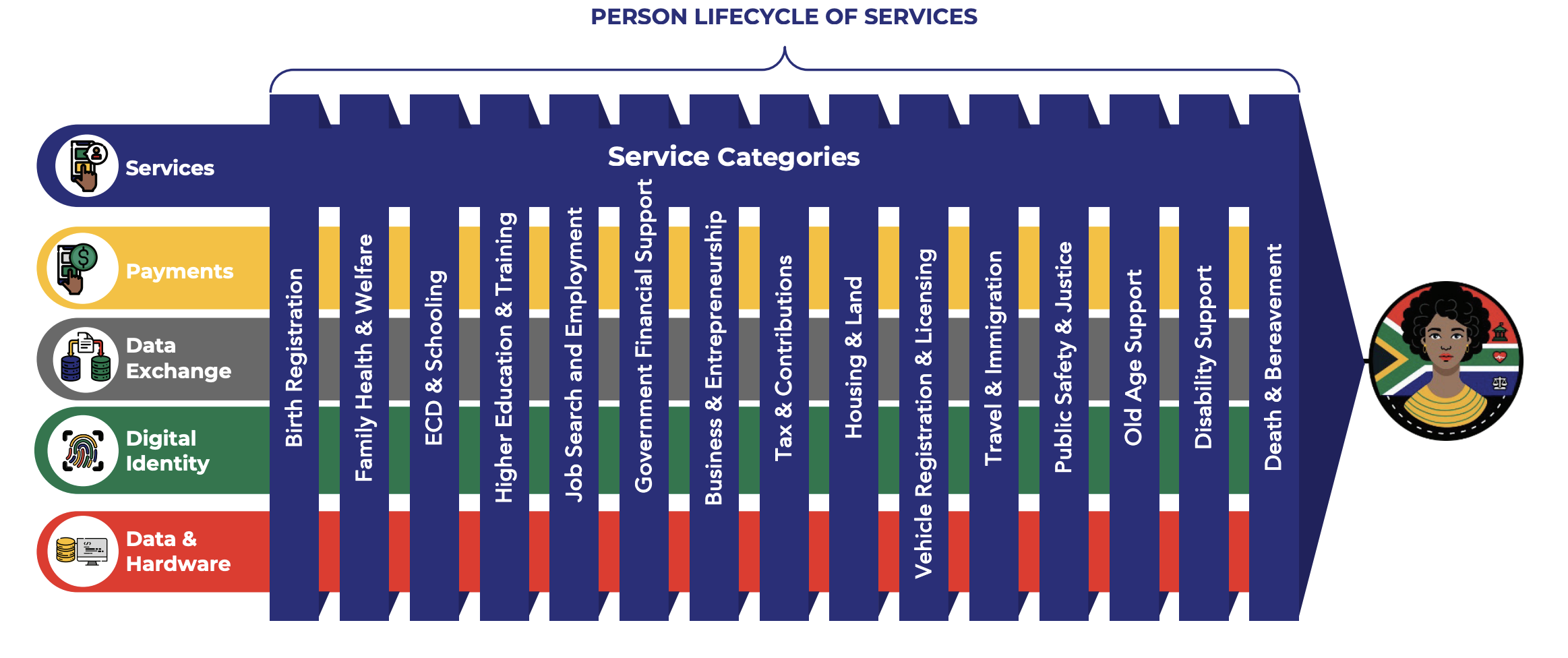
South Africa’s Roadmap For The Digital Transformation Of Government
South Africa (South Africa, Afrika-Borwa, Suid-Afrika) 🇿🇦The Roadmap for the Digital Transformation of the South African Government addresses the urgent need for a transformative shift in governmental operations

Digital Service Unit (DSU) South Africa
South Africa (South Africa, Afrika-Borwa, Suid-Afrika) 🇿🇦To drive implementation of the Roadmap, the Presidency is establishing the Digital Service Unit (DSU) to coordinate this whole-of-government effort to modernise services.

Airys
Stanford, CAA one-stop-shop web application to help finance resilient public infrastructure across the United States.

Crowdpolicy Innovation Management Platform
El. Benizeloy 82, Moschato 183 45The innovation management platform by Crowdpolicy helps organizations to run innovation programs with the right guidelines, organizational methods and advanced functions, tested in numerous implementations with measured results.

Crowdapps
El. Benizeloy 82, Moschato 183 45Web apps and solutions for Municipalities & Regions

Conhecimento e prática para a transformação do Estado

Wet open overheid (Woo)
Netherlands (Nederland, Holland) 🇳🇱The Netherlands's open government act

Crowdpolicy
El. Benizeloy 82, Moschato 183 45We build outstanding platforms with state-of-art technologies for governments, banks, and industries.

Instituto de Governo Aberto
São PauloTransparência, participação e inovação para uma sociedade mais justa, inclusiva e igualitária

GNOVA
BrasíliaNa GNova somos pessoas apaixonadas por impulsionar a inovação no setor público, resolvendo problemas de forma criativa.

Épicos
BrasíliaAumentar a segurança dos servidores públicos na execução de projetos inovadores, valorizando, prestigiando e dando voz aos inovadores.

Αποφάσεις Συλλογικών Οργάνων Moschato-Tavros
Moschato-TavrosDecisions of collective bodies in Moschato-Tavros

GNOVA Desafios
BrasíliaDesafios é uma plataforma da GNova para conectar sociedade e gestores públicos na busca por soluções que fazem a diferença no país inteiro. Vamos inovar juntos?

The Federal Commissioner for Data Protection and Freedom of Information - this is not just the Federal Commissioner himself - it is above all a modern data protection supervisory authority.

New Jersey State Office of Innovation
New Brunswick, NJThe Office of Innovation works collaboratively with government, academic, non-profit, and private sector institutions to drive innovation in the Garden State and improve the design and delivery of policies and services to the state's residents, businesses, and institutions.

Data Protection Commission of Ireland
Ireland (Éire) 🇮🇪The Data Protection Commission (DPC) is the national independent authority responsible for upholding the fundamental right of individuals in the EU to have their personal data protected.


Nominate a Rising Civic AI Leader (Aspen Digital)
Aspen Institute, Massachusetts Avenue Northwest, Washington, DCAspen Digital and the Aspen Policy Academy are launching a new program for Rising Civic AI Leaders to educate newly hired state and local government employees in charge of managing the adoption and implementation of AI-driven tools.

Public Engagement with Public Sector AI (PEPSAI)
Cardiff University, Cardiff, Wales, UKData Justice Lab Directors Arne Hintz (Cardiff University) and Joanna Redden (Western Ontario) have received funding from the Global Wales Partnership Fund to explore strategies for a more accountable use of data and AI in public services, and to enhance civic participation in governmental decision-making on data and AI deployment in Wales and Ontario.

Political Automation: An Introduction to AI in Government and its Impact on Citizens
New York City (NYC / New York, NY)Book by Eduardo Albrecht

Pilot Pitchfest
New York City (NYC / New York, NY)We match New York City agencies to local researchers and technical assistance from civic society

Colab
São PauloCom o Colab, os cidadãos podem participar ativamente das decisões da cidade, acessar os serviços da prefeitura, contribuir com ideias, reportar demandas e votar em questões cruciais para suas comunidades.

GOV.BR
BrasíliaServiços e Informações do Brasil

Productive Ways to Use GenAI for Civil Servants
2300 N Street Northwest, Washington, DC 20037This playbook is designed specifically for civil servants, offering practical guidance for using generative AI (GenAI) to help them perform their work more effectively and efficiently.

A $9.8 Trillion Opportunity. World Economic Forum report (2025)

DOGE Master Database
Washington, DCWIRED: DOGE is knitting together data from the Department of Homeland Security, Social Security Administration, and IRS that could create a surveillance tool of unprecedented scope.
The uneven reach of the state: A novel approach to mapping local state presence
Norway (Norge, Noreg) 🇳🇴A machine learning model trains on geo-located survey data to predict state presence.

The new model includes the development of the largest national legislative database, which integrates not only federal and local legislation but also judicial rulings, government processes, services, and field-level systems.


CircuLaw
AmsterdamUnlocking regulatory innovation for the circular economy transition.

AI Security Institute (AISI)
LondonThe AI Security Institute is the largest team in a government dedicated to understanding AI capabilities and risks in the world.

The First Branch LLM
Washington, DCThe First Branch LLM (Large Language Model) concept map below imagines the critical infrastructure needed at the enterprise level to create an accessible, accountable, and permanent information system for both the public and lawmakers.

Open Gov Challenge Awards
Washington, DCThe Open Gov Challenge Awards recognize the best initiatives submitted to the Open Gov Challenge, a global call to action aimed to encourage ambition in ten areas of open government critical to strengthening our democracies.

AI71
Abu DhabiWe are building conversational AI assistants that can streamline access to public information, deliver empathetic support around-the-clock, and strengthen bonds between governments and people.
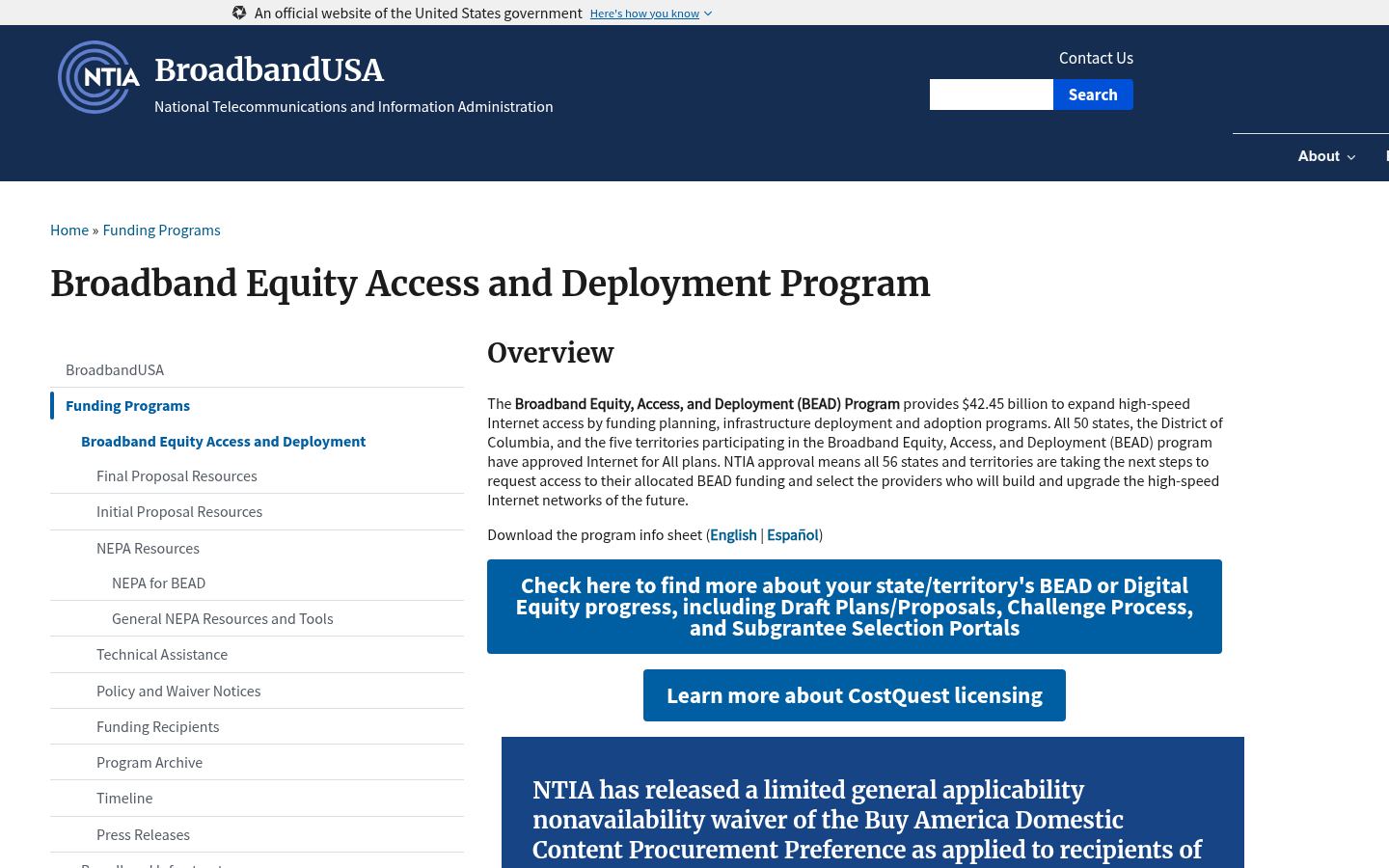
The Broadband Equity, Access, and Deployment (BEAD) Program provides $42.45 billion to expand high-speed Internet access by funding planning, infrastructure deployment and adoption programs.
FCC National Broadband Map
Washington, DCThis map displays where Internet services are available across the United States, as reported by Internet Service Providers (ISPs) to the FCC. The map will be updated continuously to improve its accuracy through a combination of FCC verification efforts, new data from Internet providers, updates to the location data, and—importantly—information from the public.
Get email updates
Helpful Links
Reach Out
A project of

With support from
National Endowment for Democracy
Founding Organization
Civic Hall
Technology partner

 Civic Tech Field Guide