Civic Tech Field Guide
Sharing knowledge and productively growing the fieldThe Tech > Media > Fight disinformation - (473)
Disinformation campaigns by states, economic opportunists, and the misinformed themselves threaten to erode the common understandings, shared identities, and empirical bedrock that underlies our collective decisionmaking. While disinformation campaigns have used mass media to spread for many years, social media platforms have proven an exceptionally hospitable environment for the proliferation of falsehoods. Those looking to limit disinformation’s effect on society and bolster truth in media have likewise turned to technology to help keep up with the volume and precision of constantly evolving disinformation campaigns.
Suggested reading:
- Matt Stempeck's research into how the Code for All network has advanced its strategies for fighting disinformation in different contexts around the world (2022)
- Digital Disinformation and Vote Suppression, The Brennan Center for Justice (2020)
- Virus Experts Aren’t Getting the Message Out Renée DiResta in The Atlantic (2020)
- Safeguarding Democracy Against Disinformation Report by the German Marshall Fund of the United States (2020)
- Browser Plug-ins That Spot Fake News Show The Difficulty Of Tackling The ‘Information Apocalypse’ Can software that spots Photoshopped images help stem the tide of misinformation? The Verge (2018)
- Can an AI Fact-Checker Solve India’s Fake News Problem? An Indian startup is using an AI tool to curb misinformation. But India poses unique challenges for the technology. Undark (2019)
- Factchecking, a Quartz Daily Obsession media collage (2019)
- Fake news and fact-checking: 7 studies you should know about, a roundup from Journalist’s Resource (2020)
- The children’s storyteller helping Taiwan sort fact from fiction, a helpful deep dive into disinfo-fighting tech (and misappropriation through national ‘fake news laws’) in Asia. Al Jazeera (2020).
- CivicSpace.tech guide to Disinformation, including its relevance to civic space, opportunities, risks, and case studies (2020)
Showing 473 Results

The ComProp Navigator
University of Oxford, 1 St Giles', Oxford OX1 3JS, UKThis is an online resource guide for civil society groups looking to better deal with the problem of disinformation.
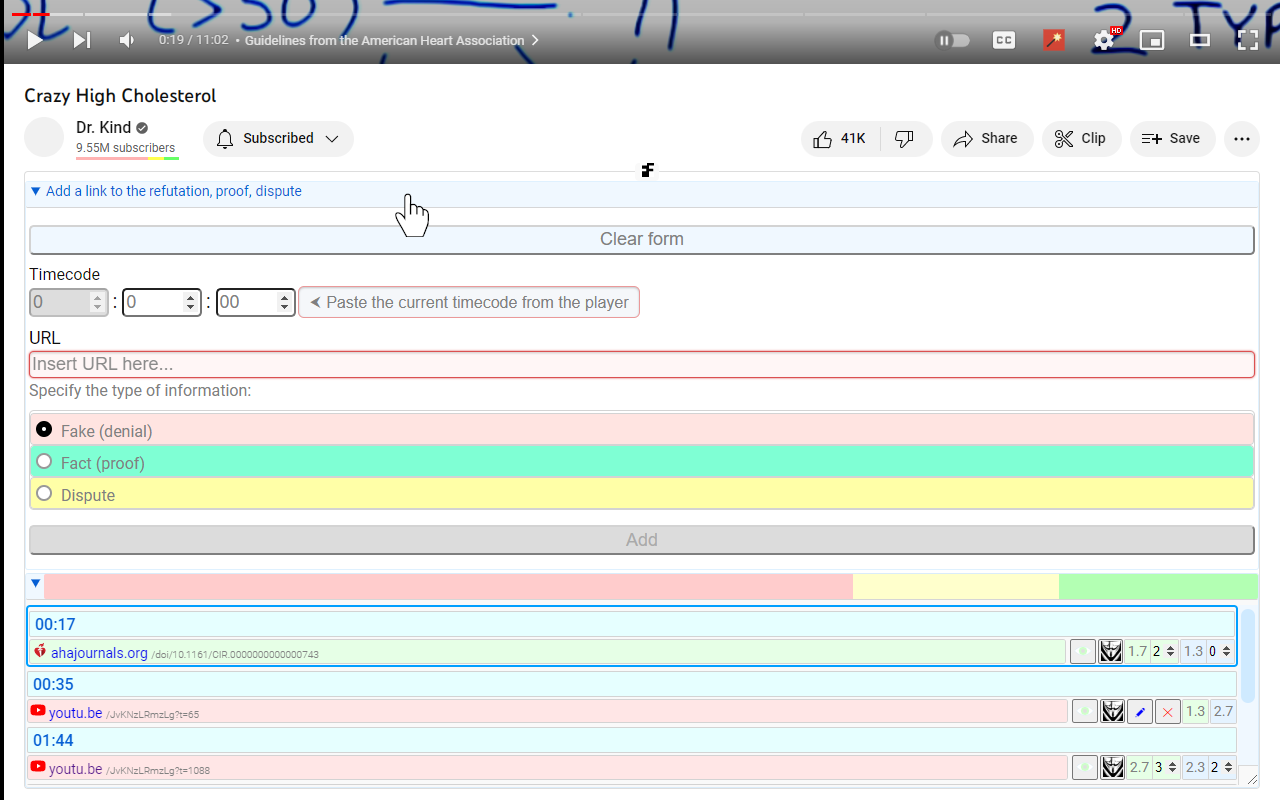
Facts and Fakes in video
Russian Federation 🇷🇺Fact-checking video for Youtube and Rutube: displaying references to refutations, proofs and disputs of the facts contained in the video, as well as the video rating of the video and the overall channel rating.

LupaMundi
Brazil (Brasil) 🇧🇷O LupaMundi - Mapa das Legislações sobre Desinformação é um mapa interativo que apresenta as leis nacionais de combate à desinformação.

Say No to Disinfo
LondonSay No To Disinfo mines peer-reviewed empirical studies for insight on the most effective way to combat any information threat.

Foundation The London Story
India (Bhārat) 🇮🇳Diaspora monitoring disinformation and hate speech in India and advocating for human rights.

Mercenários Digitais
South AmericaBrasil: Investigação transnacional revela empresas de marketing político ligadas à extrema direita

Encrypted Messaging Applications and Political Messaging: How They Work and Why Understanding Them is Important for Combating Global Disinformation
The University of Texas at Austin, Austin, TXThis report provides an overview of how various EMAs work, a review of popular EMAs and their notable features (LINE, Signal, Telegram, Viber, WhatsApp, and WeChat), and examples of how EMAs have been used for political manipulation

#teyitpedia
Turkey (Turkiye) 🇹🇷dijitalde eleştirel düşünme becerileri kazandıran, yanlış bilgi sorununa dikkat çeken, teyitçi gibi düşünmeye katkı sağlayan yazılardan oluşur.

Metamorphosis Foundation
Skopje, North MacedoniaMetamorphosis Foundation works on strengthening the awareness and capacity of citizens and civil society to assume their fullest possible role as activists for democracy, while supporting government to fulfill its democratic role in serving society.

A game to arm people against disinformation

EUfactcheck.eu
MechelenEUfactcheck, an initiative of the European Journalism Training Association (EJTA) fights misinformation about European policies and topics. Journalism students from all over Europe factcheck claims made by politicians and others and rate them.

NETTZ
BerlinHate speech on the internet has regrettably become an increasingly pressing social issue. The NETTZ network aims to confront the current trend by supporting moral courage on digital media as well as cultivating a positive debate and opinion culture on the web.

The EMIF is entrusted with an objective of public interest to support fact-checking and media literacy initiatives, as well as fundamental research projects, with a view to addressing the phenomenon of online disinformation in Europe and promoting a more resilient and fact-based digital information ecosystem.

ERSILIA
ParisErsilia Est Une Plateforme Collaborative D’éducation À L’image

Propastop
Estonia (Eesti Vabariik) 🇪🇪Propastop is a blog aimed at cleaning Estonia from propaganda, false information and media lie. The blog is run by volunteers.

Google Factcheck Explorer
Mountain View, CAA standalone product for users to query the veracity of text- and image-based claims

GlobalFact 10 Awards
Poynter Institute for Media Studies, 3rd Street South, St. Petersburg, FLWe are excited to invite you to cast your vote for this year's awards, where we celebrate exceptional work in fact-checking.

Over 700 organizations and individuals petitioning Twitter not to revoke free research access to its API


International Panel on the Information Environment (IPIE)
Switzerland (Schweiz, Suisse, Svizzera) 🇨🇭A new, independent global science organization committed to providing actionable scientific knowledge about threats to the world’s information environment

Twitter Brigade
LjubljanaAstroturfing research. We spent the second half of 2020 analysing 24 fake Twitter profiles that published divisive or hostile content and were regularly mentioned or retweeted by Slovenian right-wing politicians.

Danes je nov dan
LjubljanaLjubljana, Slovenia based civic tech NGO, focusing efforts on (digital) political participation, open data, transparency, and public institutional oversight.

In this course, you will learn how stories and narratives make disinformation popular and credible and how to counter dangerous beliefs and attitudes.

Global Fact Check Fund
Poynter Institute for Media Studies, 3rd Street South, St. Petersburg, FLThe Global Fact Check Fund will award grants in an open competition for one or a series of programs to support third-party organizations in strengthening the capabilities of fact-checking organizations across the world.

Pinterest Climate Disinformation Policy
San FranciscoOur new policy makes Pinterest the only major digital platform to have clearly defined guidelines against false or misleading climate change information, including conspiracy theories, across content and ads.

Audible reckoning: How top political podcasters spread unsubstantiated and false claims
Washington, DCBrookings report: Using a combination of analytical methods – including natural language processing, machine learning, and manual classifying – this research provided the first overarching assessment of the role that popular political podcasting plays in spreading unsubstantiated and false claims.

Junkipedia
Washington, DCJunkipedia is designed to centralize the collection of problematic content so that everyone with a stake in solving this problem can benefit from a shared understanding of what threats exist and how to respond to them.

Algorithmic Transparency Institute
Washington, DCThe Algorithmic Transparency Institute builds technology, gathers data, and generates insights to support research, journalism, and advocacy organizations.

Civic Listening Corps
Washington, DCThe CLC is a volunteer network of individuals trained to monitor for, critically evaluate, and report misinformation on diverse topics central to our civic life: voting, elections, public health, civil rights, and other important issues.

Iffy Index of Unreliable Sources
United States of America 🇺🇸The goal is to give researchers a more complete, current, and accurate dataset of sites that spread mis/disinformation, which will lead to more accurate disinformation research.


The Starling Lab Journalism Fellowship
CaliforniaThe Starling Lab, a research center anchored at Stanford University’s School of Engineering and the University of Southern California’s Shoah Foundation, has developed a ground-breaking framework to combat mis/disinformation by tracking the provenance of digital content through the use of open-source tools, best practices and case studies designed to help reduce information uncertainty.

Misinformation exposure scores measure how much the politicians and public organizations you follow tend to lie (based on fact-checking their claims by PolitiFact).

We’re looking beyond fake news to examine how manipulation of narratives, rewriting of history and altering our memories is reshaping our world.

Los Desinformantes
Argentina 🇦🇷Los desinformantes es una serie de investigaciones sobre diferentes actores que han desinformado durante la pandemia.

An Unrepresentative Democracy: How Disinformation and Online Abuse Hinder Women of Color Political Candidates in the United States
Washington, DCA report by Center for Democracy & Technology

At the Integrity Institute, we are tracking how misinformation performs on platforms to measure the extent to which platforms are amplifying misinformation, and the extent to which they are creating an incentive structure that rewards lies and misinformation online.
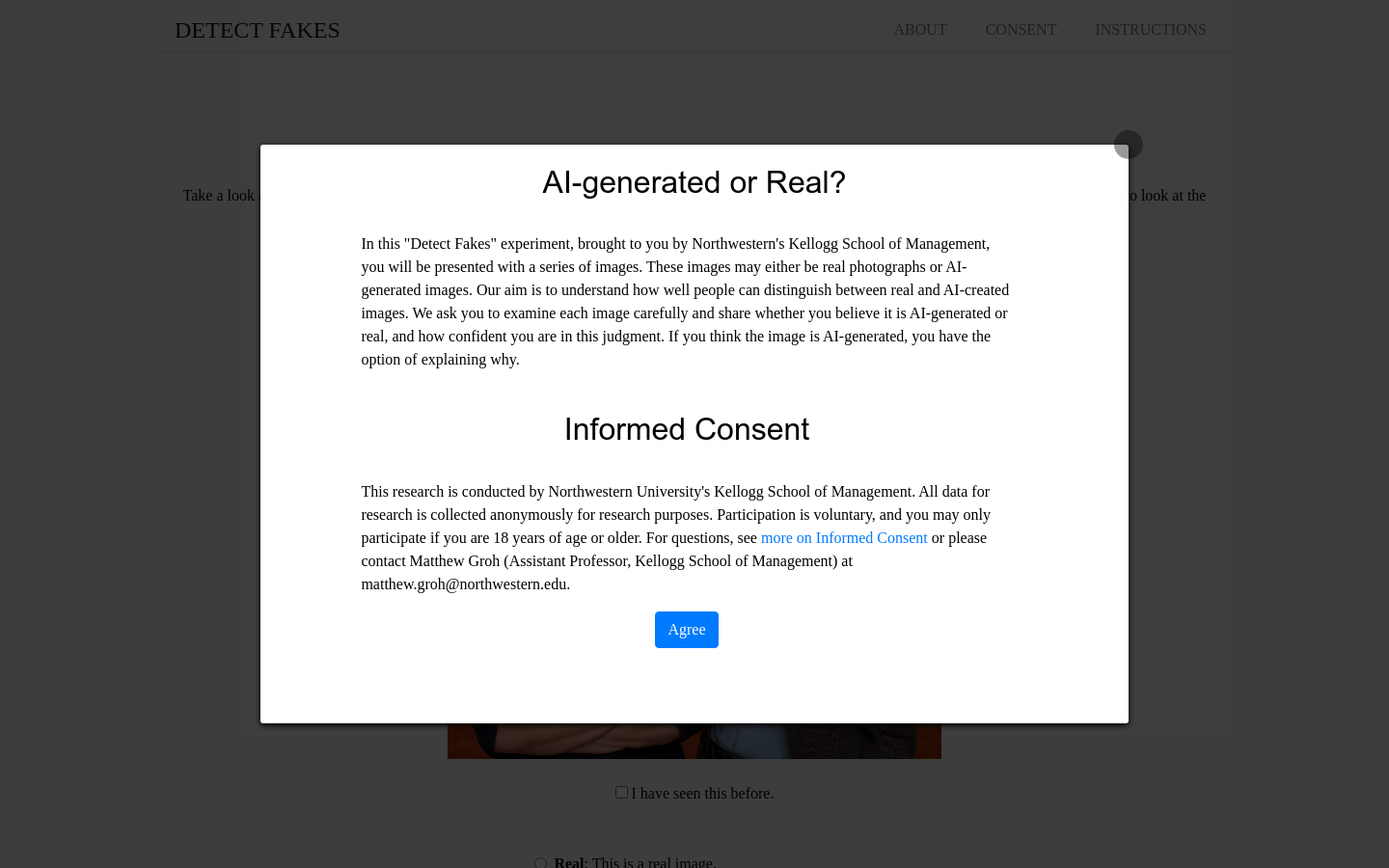
Detect Fakes
Northwestern University, Campus Drive, Evanston, ILSee for yourself how accurately you can identify AI-generated images

Disinformation is threatening our ability to get credible facts. Built on our trusted technology stack, Waterbear helps you fight back.

The Analysis and Response Toolkit for Trust or ARTT is focused on helping people engage in trust-building ways when discussing vaccine efficacy and other topics online.

Publi Ou Fake
Brazil (Brasil) 🇧🇷Uma cartilha em que trazemos ferramentas para que profissionais da área de marketing e publicidade possam navegar melhor e com mais confiança frente às complexidades da relação entre publicidade e desinformação.

Providing democratic safeguards to the global communication and information space

PolétikaRD Chequeos
C. Josefa Perdomo 160 Santo Domingo, Dominican RepublicFact-checking in the Dominican Republic

Kosh
India (Bhārat) 🇮🇳Archive containing content scraped from all the different sources- the Tattle Jod telegram bot, Fact-checking sites, social media and chat apps.

NDI's Google Sheet of guides, trainings, and reports on digital disinformation

Crowdsourcing Aid: A Case Study of the Information Chaos During India's Second Covid-19 Wave
India (Bhārat) 🇮🇳A research paper

WhatsApp archiver
India (Bhārat) 🇮🇳The WhatsApp archiver consolidates chat files exported from different WhatsApp conversations into one database

Viral Spiral
India (Bhārat) 🇮🇳Viral Spiral is an adaptive digital card game about sharing news on the Internet. The game reflects the ways and reasons misinformation is shared, letting players experience first hand the temptation to share fake news for their own gain and face the consequences of the harm it causes around them.

factchecking-sites-scraper
India (Bhārat) 🇮🇳One of Tattle's goals is to make stories fact-checking content circulated on chat apps and social media more accessible to mobile first users

Desgrabador
Argentina 🇦🇷Voy a extraer por vos los subtítulos generados automáticamente por Youtube.
Get email updates
Helpful Links
Reach Out
A project of

With support from
National Endowment for Democracy
Founding Organization
Civic Hall
Technology partner

 Civic Tech Field Guide