Civic Tech Field Guide
Sharing knowledge and productively growing the field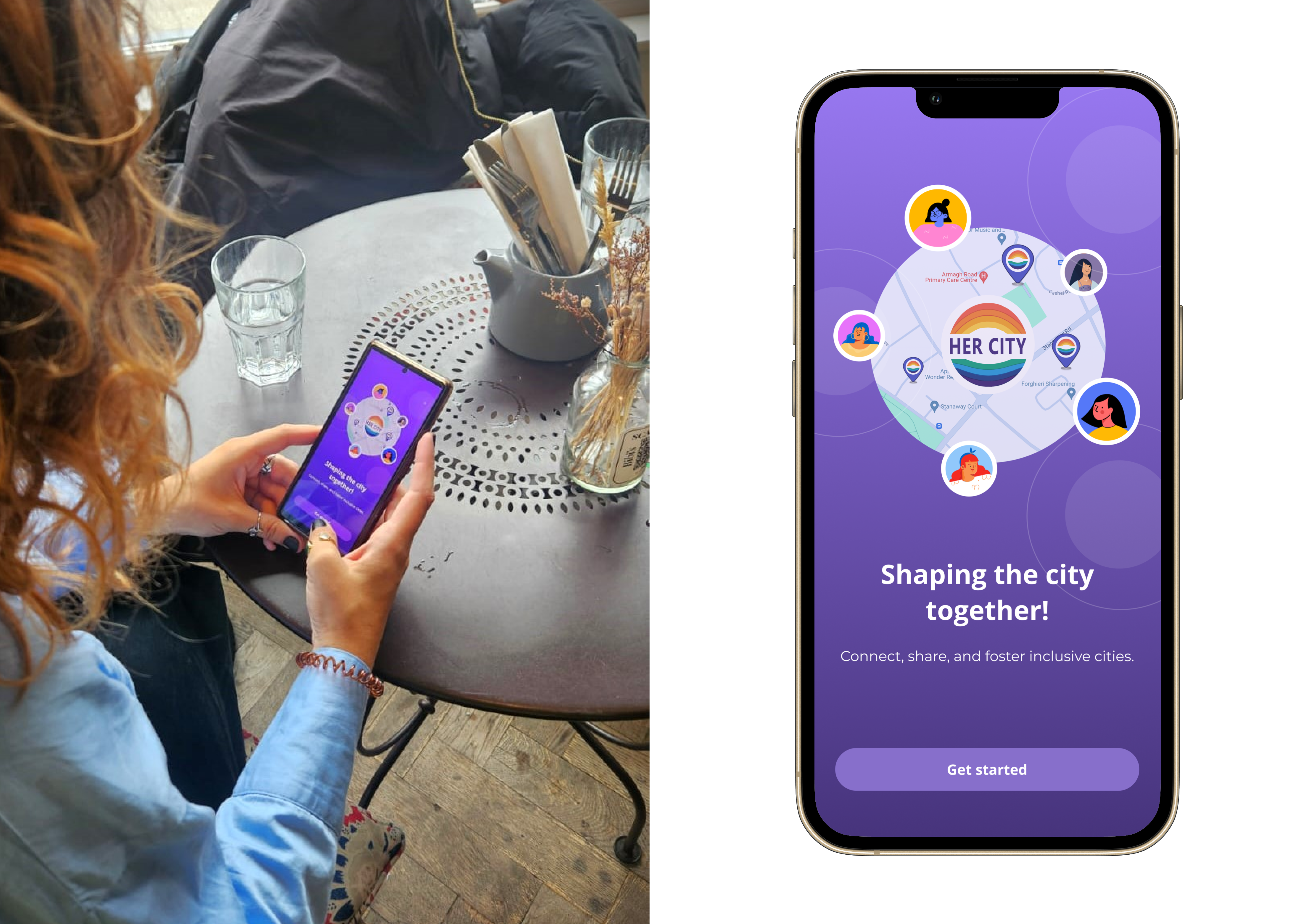
Civic tech and urban safety project that uses participatory research and co-design with women and LGBTQ+ communities to map safe/unsafe spaces and build community-driven tools— including a safe space certification, anti-harassment interventions, and a digital platform for trusted mobility, peer support, and collective care.
Shaping HerCity began in 2024 as a research-through-design project at the National College of Art & Design (Dublin), responding to a consistent gap: urban safety frameworks tend to rely on surveillance and reporting, while everyday experiences of women and LGBTQ+ people point to trust, visibility, and collective care as the actual drivers of safety.
The project is for women and LGBTQ+ communities navigating cities, particularly in nightlife and everyday mobility contexts, as well as for venue owners, local organizations, and municipalities interested in more participatory and community-grounded approaches to safety. Rather than treating users as passive recipients of protection, it positions them as active agents shaping what safety means in practice.
Methodologically, the project combines ethnography, diary studies, participatory mapping, and co-creation. These processes informed the development of three interconnected interventions:
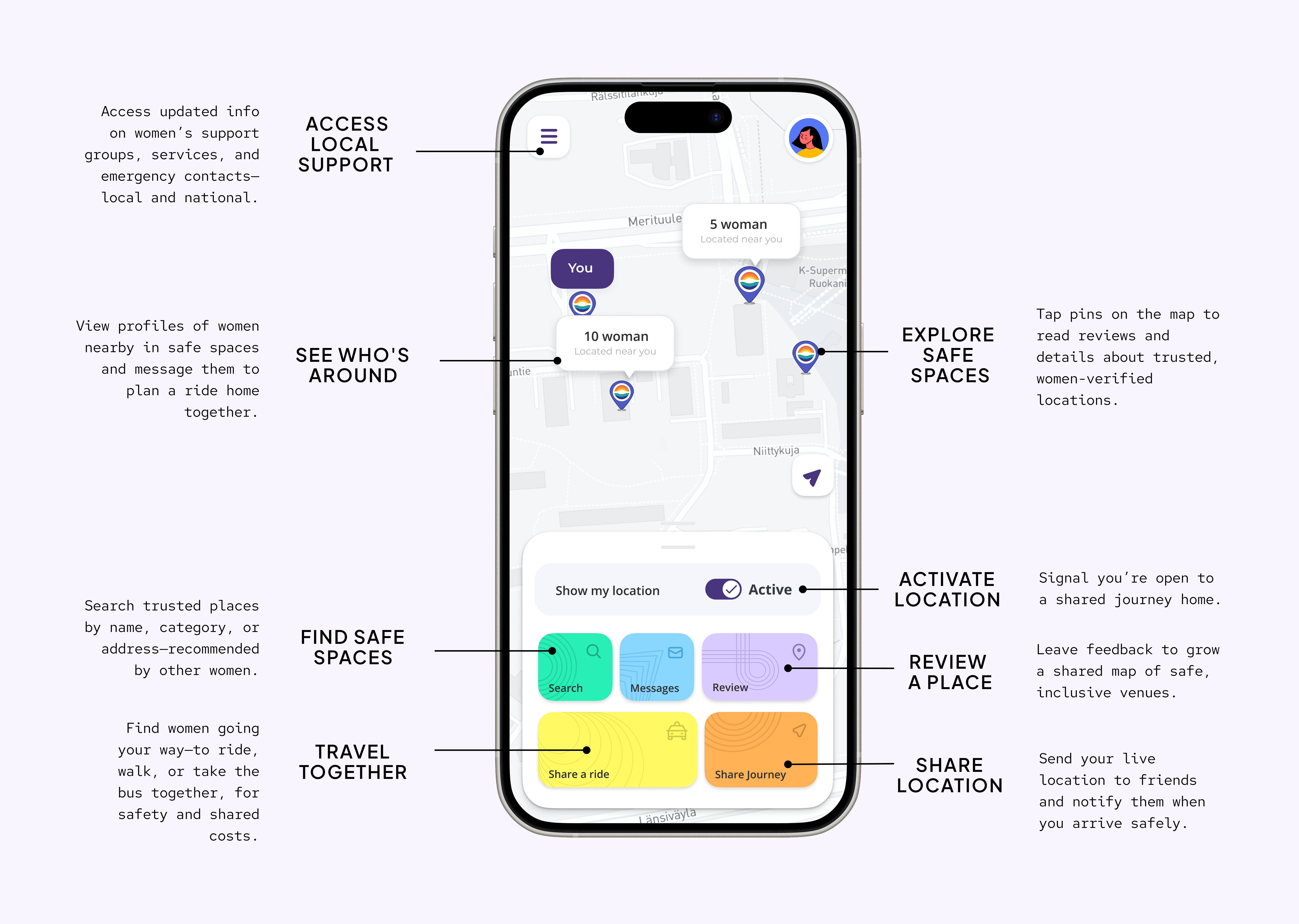
a Safe Space Award, which makes inclusive venues visible and accountable; a “Stop It!” card, a low-risk, non-verbal tool to interrupt harassment without escalation; and a digital platform, which maps trusted places, shares community knowledge, and enables peer-supported mobility (e.g., coordinating rides or walking together).
In terms of impact, the project demonstrates that safety can be operationalized as a community-led ecosystem rather than a top-down control system. Prototyping and testing showed increased visibility of trusted spaces, strengthened informal support networks, and the feasibility of translating lived experiences into actionable civic tools. The framework is designed to be adaptable and transferable to different urban contexts.
There are several ways to contribute or collaborate:
Research and piloting: partner with local communities, cities, or organizations to test and adapt the tools in new contexts.
Technical development: support the evolution of the digital platform (mapping, trust signals, coordination features).
Partnerships with venues and NGOs: expand the Safe Space Award and embed it in existing local ecosystems.
Funding and scaling: help move from prototype to sustained, community-governed infrastructure.
The project is open to collaboration across civic tech, urban design, public policy, and community organizing, particularly where there is an interest in rethinking safety beyond surveillance and toward collective, situated practices.
| Organization Type: | Academic / research organization |
|---|---|
| Status: | Active |
| Claimed Status: | Claimed |
| Last Modified: | 5/9/2026 |
| Added on: | 5/3/2026 |
Project Categories
Additional Images

Get email updates
Helpful Links
Reach Out
A project of

With support from
National Endowment for Democracy
Founding Organization
Civic Hall
Technology partner

 Civic Tech Field Guide