Civic Tech Field Guide
Sharing knowledge and productively growing the field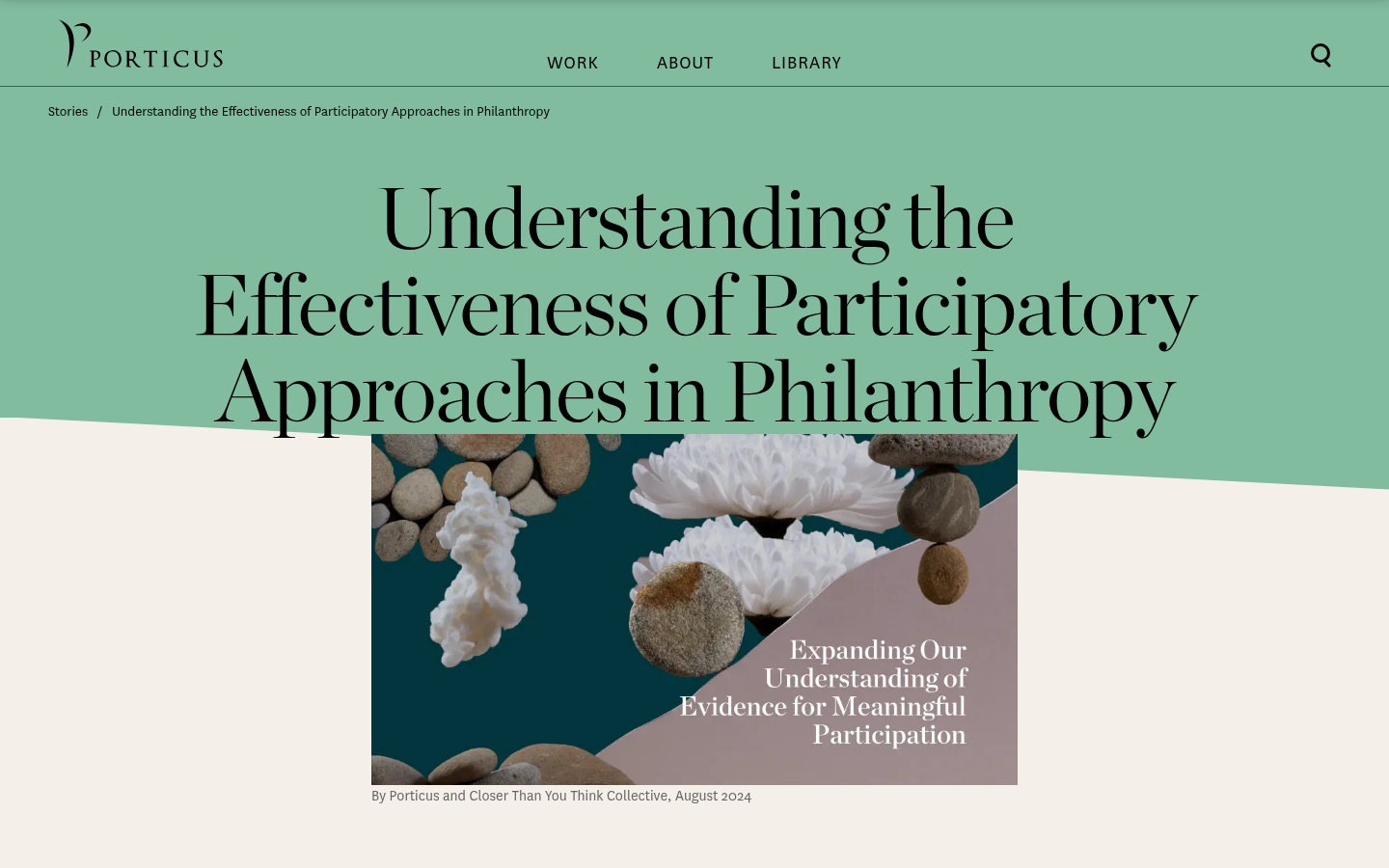
There is a widely held belief that participatory grant-making can democratise philanthropy and transform power dynamics, but the evidence supporting these claims needs to be bolstered. That's why Porticus is commissioned [this] study.
The study found several concrete examples of evidence supporting the effectiveness of participatory approaches:
Service Delivery: COVID-19 Response: Jumpstart Refugee Talent provided aid to over 1000 households. Bhutanese and Congolese Refugee-Led Organisations effectively managed outreach, programming, and advocacy, leveraging community knowledge for crisis response.
Research and Policy: Asia Pacific Forum on Women, Law and Development's feminist participatory action research (FPAR) mobilised marginalised women to conduct climate displacement projects, leading to grassroots activism and policy changes.
Justice System Reform: APAC (Brazil) and Norwegian prison models demonstrated how prisoner participation cultivated responsibility, contributing to lower recidivism rates and improved life skills post-release.
Participatory Grant-making: FRIDA's approach showed positive impacts, with most participating collectives emphasising the importance of inclusion in decision-making. The Tar Kura program in Sierra Leone increased the capacity of youth-led organisations and enhanced youth engagement in decision-making processes.
Climate Action and Resource Allocation: Scotland's Just Transition Fund used participatory budgeting to expand climate investment beneficiaries through localised decision-making.
| Organization Type: | Non-profit / charity / foundation |
|---|---|
| Status: | N/A |
| Founded: | 2024 |
| Parent Organization: | Porticus |
| Last Modified: | 3/23/2026 |
| Added on: | 8/22/2025 |
Project Categories
Get email updates
Helpful Links
Reach Out
A project of

With support from
National Endowment for Democracy
Founding Organization
Civic Hall
Technology partner

 Civic Tech Field Guide